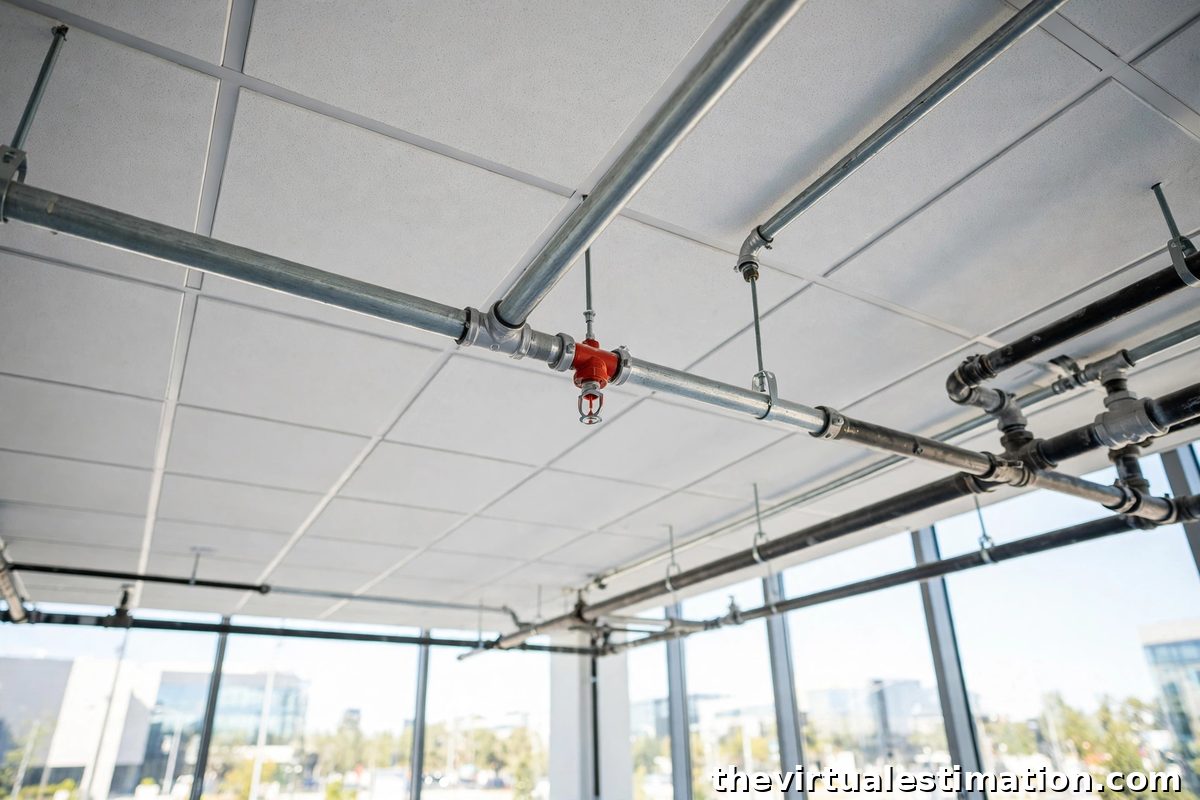
A commercial fire sprinkler system costs $250 to $400 per head installed in 2027, head, fitting and branch line connection included. The head itself is the cheap part, $5 to $40 for a standard commercial head. The rest is pipe, fittings, hangers and the fitter's labor to hang it all. That per-head number is the fastest way to sanity check a sprinkler bid, and this guide shows you how to build it from a real takeoff instead of trusting a square foot rate.
Who this is for: general contractors, fire protection subcontractors and estimators pricing commercial sprinkler work, and building owners checking a sprinkler quote before they sign it.
What one sprinkler head actually costs
There are two different per-head numbers and mixing them up is the most common pricing mistake in this trade. The first is the price of the head alone. The second is the installed cost of that head in a finished system. They differ by a factor of ten, and both are correct for different jobs.
| Head type | Head only | Installed per head | Where you see it |
|---|---|---|---|
| Standard pendent or upright, K=80 | $5 to $30 | $250 to $400 | Offices, retail, schools |
| Quick response, K=80 or K=115 | $7 to $40 | $275 to $450 | Light hazard with faster activation |
| Sidewall | $15 to $40 | $275 to $450 | Hallways, small rooms, no ceiling grid |
| Concealed pendent with cover plate | $20 to $60 | $400 to $650 | Hotels, lobbies, finished ceilings |
| Extended coverage, K=115 | $16 to $32 | $300 to $500 | Large open areas, fewer heads |
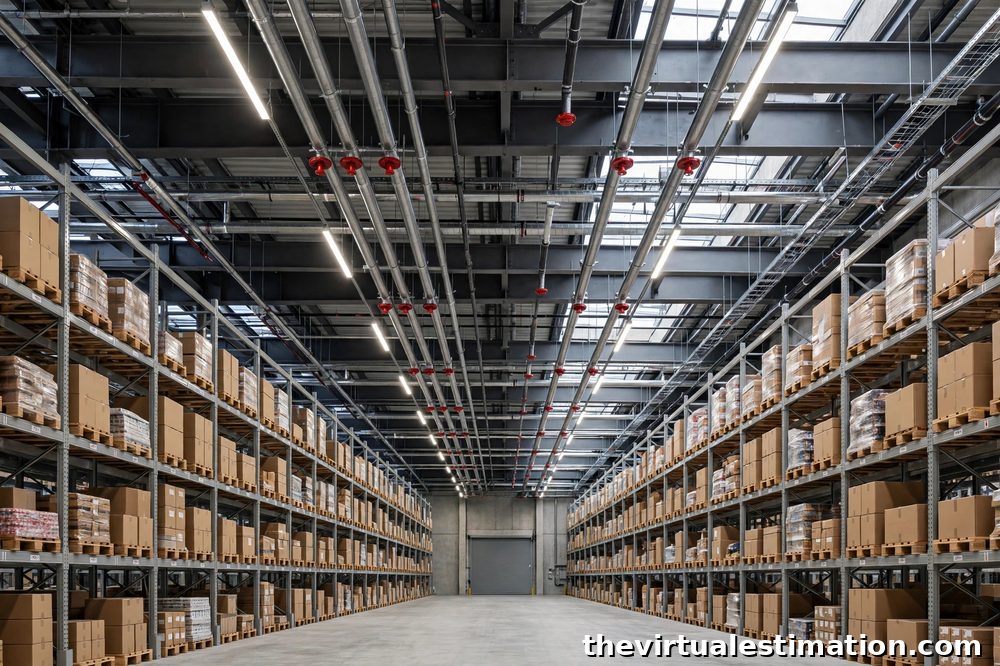
| ESFR warehouse head, K=161 to K=363 | $25 to $55 | $500 to $900 | High-bay warehouses, rack storage |
Head-only prices come from 2026 published pricing guides (Total Fire Protection, CA-Fire). Installed figures include the head, the fitting, the branch line connection and the labor to install it, which is how sprinkler contractors actually build their price. Concealed heads run two to three times a standard head because of the cover plate and housing, and that premium shows up on every head in a hotel or a Class A lobby, so do not price them at standard rates.
The head count itself comes from the hazard classification. Under NFPA 13, light hazard spaces such as offices take one head per 130 to 200 square feet, ordinary hazard spaces such as retail and parking garages take one per 130 square feet, and extra hazard spaces such as chemical storage take one per 90 to 130 square feet. Ceiling height and obstructions tighten those numbers further, so the count always comes from the reflected ceiling plan, never from a rule of thumb applied to the whole floor plate.
Worked example: a 20,000 square foot office
Here is the per-head method applied to a real job, a single-story 20,000 square foot office, light hazard, wet pipe system, drop ceiling, new construction, municipal water supply with adequate pressure.
| Line item | Quantity | Unit price | Amount |
|---|---|---|---|
| Heads, fittings and branch connections | 100 heads | $250 to $400 | $25,000 to $40,000 |
| Riser, alarm valve, flow switch, gauges | 1 lot | $3,000 to $6,000 | $3,000 to $6,000 |
| Design and hydraulic calculations | 1 lot | $2,500 to $5,000 | $2,500 to $5,000 |
| Permit and inspections | 1 lot | $500 to $2,500 | $500 to $2,500 |
| Subtotal before backflow and pump | $31,000 to $53,500 |
How the head count was set: 20,000 square feet divided by 200 square feet per head gives 100 heads. NFPA 13 allows up to 225 square feet per standard spray head in light hazard, but 200 is the working number once you account for corridors, small rooms and columns that break up the grid. Add a spare head cabinet with a handful of each head type, which NFPA 13 requires, at a few hundred dollars.
Now cross-check the total against the square foot rate. A new wet pipe system in 2026 published guides runs $1.50 to $3.00 per square foot, which puts this building at $30,000 to $60,000. The per-head build-up lands at $31,000 to $53,500, squarely inside that band. When the two methods agree, you can trust the number. When they disagree by more than 20 percent, one of them is wrong, and it is usually the square foot rate, because it cannot see the ceiling height, the room count or the hazard mix.
For contrast, a 50,000 square foot warehouse with high-bay rack storage and an ESFR system prices very differently. Published 2026 guides put warehouse work at $1.50 to $4.00 per square foot, or $75,000 to $200,000 for the building, with ESFR heads at $25 to $55 each before installation and larger pipe and a bigger water demand pushing the per-head installed figure toward $500 to $900. Same trade, same standard, double the per-head cost, because the hazard and the head changed.
The per-square-foot cross-check, by system type
Use this table as the second opinion on your per-head math, not as the price itself.
| System type | New construction | Retrofit | Best for |
|---|---|---|---|
| Wet pipe | $1.50 to $3.00 per sq ft | $2.00 to $7.00 per sq ft | Heated buildings, most common |
| Dry pipe | $3.00 to $9.00 per sq ft | $3.00 to $9.00 per sq ft | Unheated warehouses, garages, cold storage |
| Pre-action | $4.00 to $15.00 per sq ft | $4.00 to $15.00 per sq ft | Data centers, archives, museums |
| Deluge | $5.00 to $8.00 per sq ft | $5.00 to $8.00 per sq ft | Aircraft hangars, chemical storage |
| High-rise | $4.00 to $8.00 per sq ft | $4.00 to $8.00 per sq ft | Four stories and up, standpipe and pump |
Retrofits cost roughly double new construction because fitters work around occupied space, existing structure and finished ceilings. A tenant fit-out that only relocates heads in an existing sprinklered space is cheaper, typically $3 to $8 per square foot, because the riser, water supply and monitoring are already installed. Our fire suppression takeoff guide covers how to count heads, pipe and hangers from the drawings before you price any of this.
Six things that move the per-head number
1. Hazard classification. This is the biggest lever. NFPA 13 sorts occupancies into light, ordinary and extra hazard, and the classification sets head density, pipe sizes and water demand. Two buildings of the same size can carry very different sprinkler costs for this reason alone.
2. Ceiling height and type. Drop ceilings with acoustic tile are the cheapest to work in, because tiles pop out and the pipe above is accessible. Exposed structure, hard lids and ceilings over 20 feet add labor on every head. High-bay warehouses need ESFR heads and larger mains.
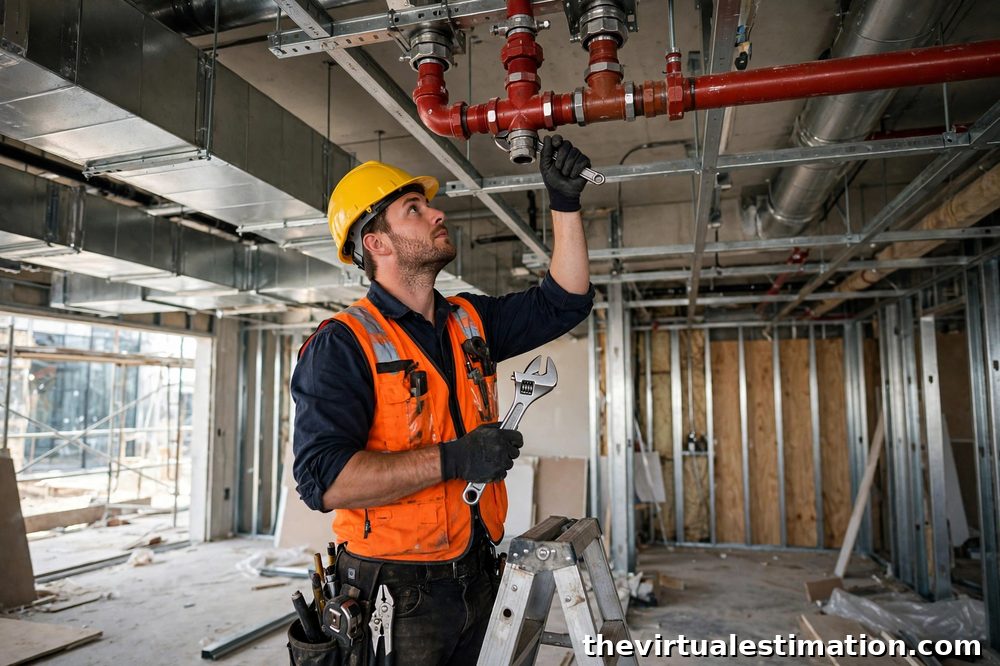
3. System type. A dry pipe system costs more than wet pipe because of the air compressor, the dry valve and the extra testing. Pre-action adds detection and a second trigger, which is why data centers pay $4 to $15 per square foot. If your project is a data center, the pre-action premium belongs in the budget from day one, as our data center cost per MW guide shows.
4. New construction versus retrofit. Open walls and ceilings cut labor sharply. In a retrofit, every head relocation means cutting, patching and working nights or weekends around tenants. Budget $2 to $7 per square foot for a retrofit wet pipe system against $1.50 to $3.00 for new work.
5. Pipe material. Schedule 40 black steel is the commercial standard at roughly $2 to $4 per linear foot installed. CPVC, listed for many light hazard occupancies such as offices, runs 30 to 50 percent cheaper in material and labor, around $1.50 to $2.50 per linear foot, and installs faster. Steel prices moved up sharply in 2026, with steel mill products up over 20 percent year over year and Section 232 tariffs raised to 50 percent on imported steel, so confirm current steel pricing on every bid rather than carrying last year's rate.
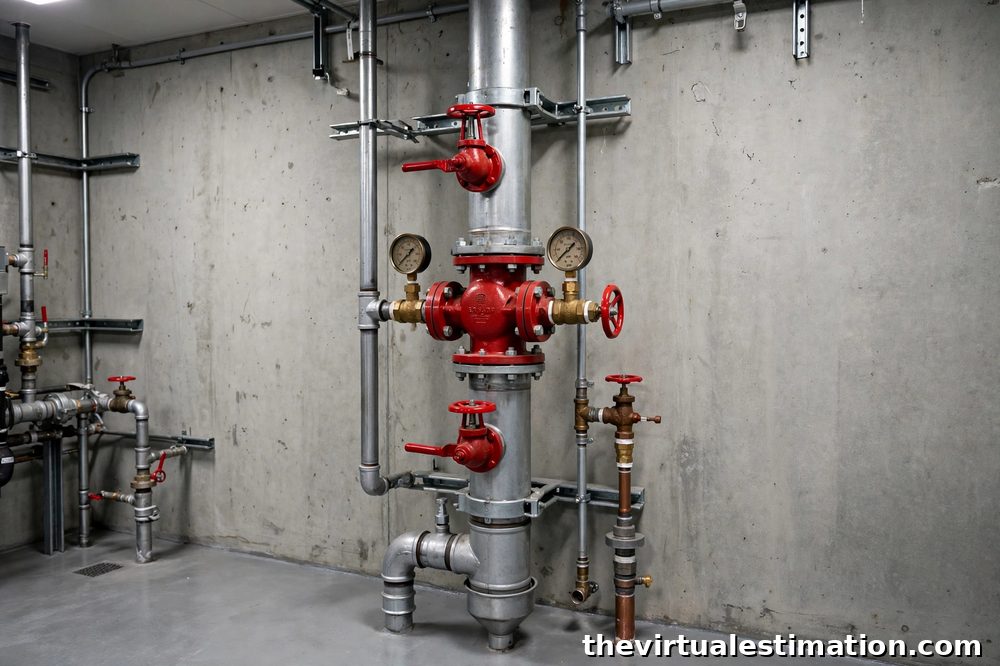
6. Water supply and fire pump. If municipal pressure cannot meet the hydraulic demand, a fire pump enters the budget at $15,000 to $75,000, plus a backflow preventer at $3,000 to $10,000. These two items can exceed the cost of all the heads in a small building, which is why a per-head price that ignores them is not a project price.
How estimators price it: the method
The per-head figure is a check, not a takeoff. A defensible sprinkler estimate is built in five steps, and the per-head number falls out of the build-up at the end.
Step 1, classify the hazard. Walk the drawings and assign an NFPA 13 hazard class to every space. Mixed occupancies get priced by their highest hazard area, not averaged down.
Step 2, lay out and count the heads. Count heads from the reflected ceiling plan by room, applying the coverage area for each hazard class. Count concealed heads separately, since they cost two to three times a standard head. Add the spare head cabinet NFPA 13 requires.
Step 3, take off the pipe. Measure mains, risers and branch lines by diameter and material, and count hangers, fittings and valves. Pipe is where most of the money sits, and it is where square foot rates fail, because two buildings with the same head count can have very different pipe runs.
Step 4, price the fixed items as lump sums. Riser assembly, alarm valve, flow switch, backflow preventer, fire pump if needed, design and hydraulic calculations, permit, testing and commissioning. Get these as quoted lump sums wherever possible rather than guessing them as a percentage.
Step 5, add labor, overhead and margin. Apply the fitter crew rate and the labor hours per head and per linear foot of pipe, then overhead and margin. Only then divide the total by the head count to get your true installed cost per head, and compare it with the $250 to $400 benchmark. If your number sits far outside that band, find out why before the bid goes out.
One code change worth knowing: the 2025 edition of NFPA 13 raised the maximum protected area for light hazard wet pipe systems by 50 percent, from 52,000 to 78,000 square feet. On a large single-story building that can mean fewer independent systems, which trims riser and valve costs. Confirm which edition your local authority has adopted before you count on it, since adoption dates vary by jurisdiction.
What the per-head price leaves out
A per-head number covers heads, fittings, branch connections and installation labor. It does not cover design, permits, the riser, the backflow preventer, a fire pump, alarm monitoring tie-in, or the annual inspection and testing that keeps the system legal. Permits alone run $500 to $5,000 for most commercial projects, and some cities charge per head, Philadelphia charges $15.10 per sprinkler head, so a 500-head job carries over $7,500 in permit fees before a single pipe is hung. Add these as separate lines, and show them as separate lines, so the owner can see what is scope and what is fee.
The performance case is worth stating plainly to an owner who asks whether sprinklers are worth the money. NFPA data shows wet pipe systems operate successfully in 92 percent of fires where sprinklers are present, and 89 percent of the time one or two heads are enough to control the fire. That is the return on the per-head price.
Three mistakes that blow up a sprinkler budget
Pricing from square footage alone. A square foot rate cannot see ceiling height, room count, hazard mix or pipe routing. Use it only as a cross-check on a head-count build-up, never as the bid.
Forgetting the water supply. A weak municipal supply means a fire pump, a tank or both. Check available pressure and flow before pricing, not after the bid is submitted.
Carrying last year's steel price. Steel pipe is the largest material line in the system and its price moved sharply in 2026. Re-price steel and CPVC on every estimate, and note the pricing date on the bid.
Frequently asked questions
How much does one fire sprinkler head cost installed?
A standard commercial head runs $250 to $400 installed, including the head, fitting, branch line connection and labor. The head alone costs $5 to $30. Concealed heads run $400 to $650 installed, and ESFR warehouse heads run $500 to $900 installed.
How many sprinkler heads does a commercial building need?
Divide the sprinklered area by the coverage per head for its hazard class: one head per 130 to 200 square feet for light hazard, one per 130 square feet for ordinary hazard, and one per 90 to 130 square feet for extra hazard. The final count comes from the reflected ceiling plan, not from the division alone.
Is a retrofit really twice the cost of new construction?
Often, yes. A new wet pipe system runs $1.50 to $3.00 per square foot, while a retrofit runs $2.00 to $7.00, because fitters work around existing structure, finished ceilings and occupied space. A tenant fit-out that only relocates heads in an existing system is cheaper, at $3 to $8 per square foot.
Fire sprinkler pricing rewards the estimator who counts heads and measures pipe instead of multiplying square footage by a rate. Build the price from the head count up, cross-check it against the square foot band, and price the pump, the backflow preventer and the permit as their own lines. If you want that build-up done for your project, The Virtual Estimation provides detailed fire protection and fire sprinkler estimating services for commercial contractors across the US. Send your drawings to info@thevirtualestimation.com and get a line-item takeoff with head counts, pipe quantities and a priced schedule you can bid from.