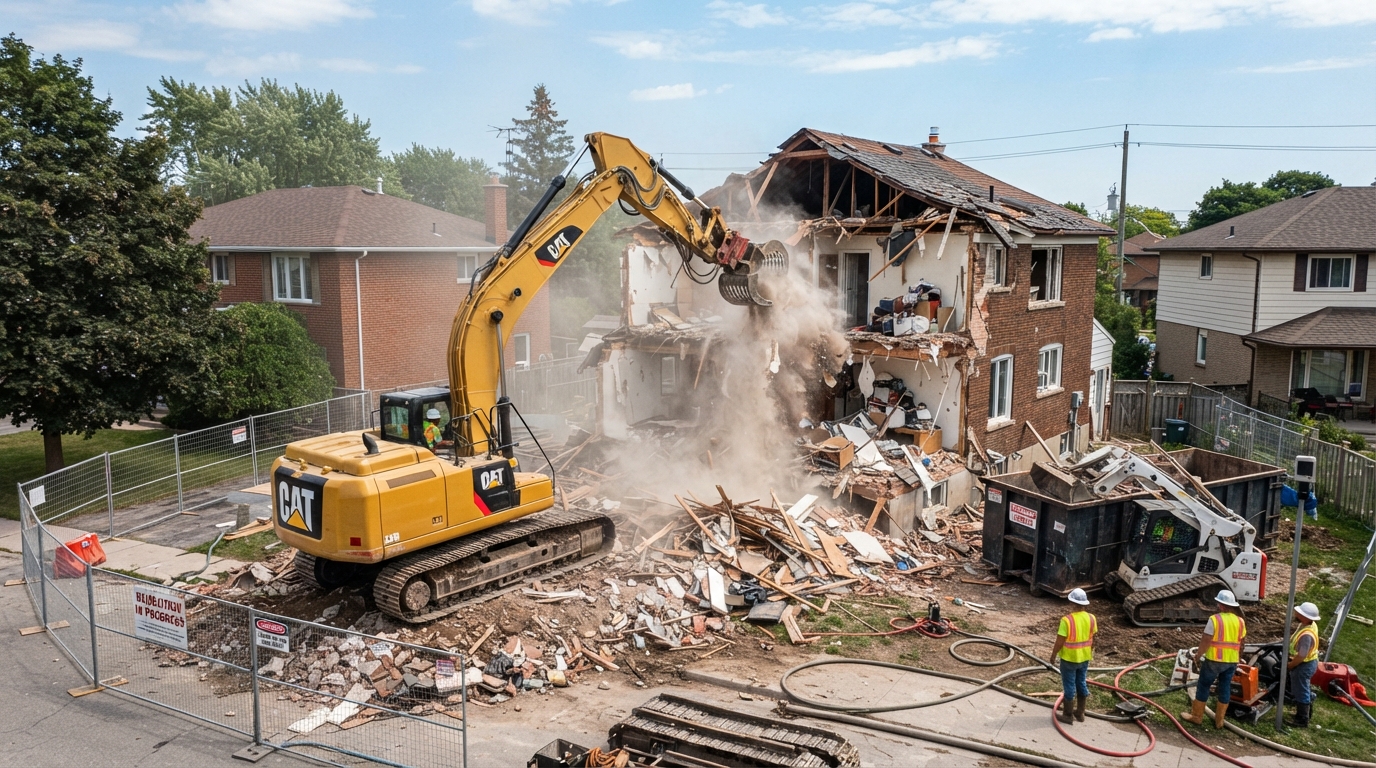
A house demolition is a large undertaking, yet occasionally a building needs to be demolished to make way for a new building or clear land to allow for some other use. In this planning, safety and preparation are needed, and knocking down the walls may be easy. It could lead to injuries, damage to property, or litigation when performed poorly. The demolition should be appropriately evaluated, armed, and a permit issued, along with an appropriate plan to dispose of the rubbish and recycling material.
To get the correct budget and planning, experts in the field of demolition normally use demolition estimating services to establish the equipment requirements, the number of labor hours, and the cost of disposal, depending on the method that is adopted.
Step 1: Plan and Assess the House

Before arriving, make sure the house has been checked. Identify structural elements like load-bearing walls, electrical wiring, plumbing, and any dangerous substances like asbestos or lead paint. A professional inspector would help in detecting the dangerous materials that are to be treated in a special manner.
Consider what needs to be broken down in the house and what may be reused. Proper inspections will save you the inconveniences of problems that may occur unexpectedly and may even make the demolition process safe. It is important to do proper budgeting. Many professional contractors employ estimation companies in USA to estimate the number of labourers, equipment, and disposal costs, as well as the schedules associated with the start of the work.
Step 2: Get Permits and Local Regulations

This is because in most cities, it will be impossible to demolish a structure without a demolition permit. Ask your local building department to find out the regulations and charges. You might also be required to discontinue the supply of water, electricity, gas, and sewer lines. Legal requirements have to be adhered to in order to prevent fines or safety issues. Make sure that you have all the paperwork before the demolition.
Step 3: Prepare the Site

Clear the grounds and the space of cars, furniture, and other obstructions. Fencing or the erection of barriers to make sure that there is not too much distance between passersby. Map the location of scraps and ascertain the safe area of the employees. A healthy and presentable area will reduce the number of accidents and the demolition process.
Step 4: Choose a Demolition Method
One can knock down a house in certain ways, according to the extent of its size, location, and affordability:
Manual demolition: Demolition carried out using manual tools that include a hammer, crowbars, and saws. Small house or selective demolition when only part of a building is demolished.
Mechanical demolition: It is done through the assistance of heavy machinery like excavators, bulldozers, or cranes. It is an acceptable solution in large structures; however, it requires qualified operators.
Deconstruction: The process of breaking the house down in a manner that the materials may be repurposed. Green and cost-effective. Recycles the wood, metal, and fixtures.
Select the strategy that is going to satisfy your goals, financial resources, and security requirements.
Step 5: Disconnect Utilities
Any demolition must have all the utilities disconnected. Turn off the power on the main breaker, cut off the water lines and gas lines, and seal the sewer lines. This will prevent accidents like fires, flooding, or gas leakage. Some disconnections of utility can be unsafe and need to be done by licensed professionals.
Step 6: Start the Demolition

Manual demolition: Start at the roof/ upper stories and proceed down. Begin with removable windows, doors, and fixtures, and then go down to the walls and floors.
Mechanical demolition: Systematic knocking down of the walls and the structures takes place using a machine, beginning from the top to the bottom.
Deconstruction: Dismantle, take the object apart into parts, and keep them to be used again.
Helmets, gloves, goggles, and steel-toed boots are the protective gear that should always be used. Presence of a first aid kit and emergency contacts.
Step 7: Remove Debris

Clean up after the removal of rubble, wood, metal, and other materials. Items that can be sold or reused by an individual, e.g., metal beams, pipes, or cabinetry. One can rent a dumpster or a waste removal service to make the process of cleaning more efficient. The rubble will be disposed of properly, which will keep the location clean and lower the environmental impact.
Step 8: Safety and Environmental Considerations
Dust, chemicals, and other pollutants can be released during demolition. Use sprays of water to reduce dust and work with hazardous materials. Ensure that workers are not compromising the safety measures and that they have a good perimeter. The verification of local environmental regulations will guarantee compliance; it will also prevent harm to workers and the community.
Step 9: Prepare the Site for Future Use

When the house is cleared and debris removed, level the ground and cover holes. The soil might require compaction, particularly when you are planning to construct a new building. Use landscaping or gravel covering to stop erosion. Site preparation will ensure that your property is prepared to be constructed, or even gardened, or any other project in the future.
Conclusion
House demolition is a complicated process that involves planning, precaution, and disposal of materials. The evaluation of the structure, issuance of permits, site preparation, selection of the appropriate mode of demolition, and responsible cleanup will enable you to accomplish the project safely and efficiently. Whether a demolition is done to make another new one or the land is cleared up due to some other reason, these steps will make sure that the demolition is well planned, environmentally friendly, and risk-free. A house demolition can be done successfully with good execution, and hence, a safe and ready-to-use site is left where you can continue on your next project.
FAQs
Do I need a permit to demolish a house?
Yes. A demolition permit is normally needed in most areas, and utility disconnection approvals and waste disposal approvals might be necessary, too.
Can I demolish a house myself?
When it comes to small construction, it is possible to demolish them by hand; in the case of bigger homes or heavy equipment, it is also possible to hire experts who will be safer and more effective.
How do I handle hazardous materials like asbestos?
Special contractors are expected to dispose of hazardous materials in a careful manner. It is difficult and may be risky to do it on your own, such as removing asbestos or lead-based paints.