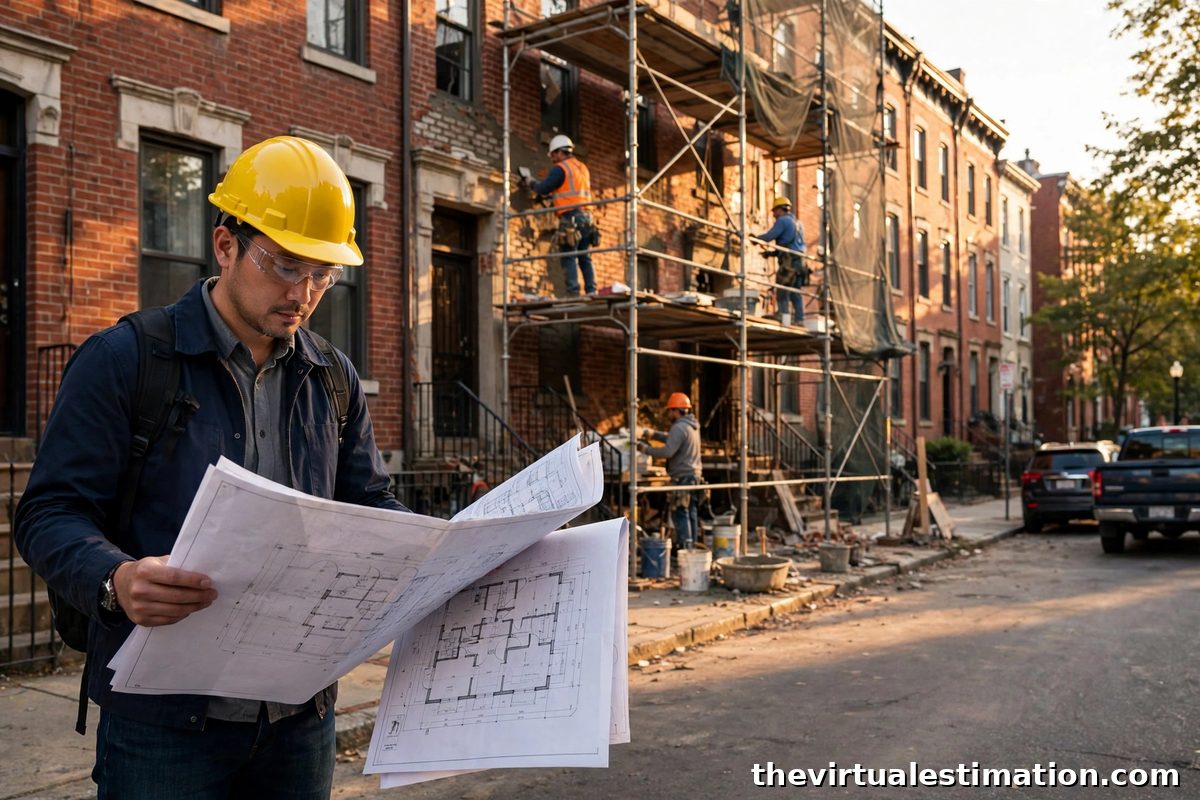
Construction estimating services in Nashville work when the number is built for Davidson County, not borrowed from another fast growing city. The short answer is this: price the 2024 codes, price the floodplain and site work lot by lot, and price craft labor as the tight market it is in 2026. Do those three things and your Nashville bid will hold up better than a square foot rate pulled from a national chart.
Who this is for: general contractors, specialty subcontractors, home builders, and developers bidding work in Nashville and the surrounding Middle Tennessee counties, including Williamson, Rutherford, Wilson, Sumner, and Robertson counties.
If you are bidding in Nashville for the first time, the city can mislead you in a pleasant way. Permit fees look low compared with coastal cities, land is still moving, and cranes are visible from almost every downtown approach. None of that means the estimate is simple. The work that blows up a Nashville budget usually sits in three places: a code set that changed in 2025, a lot that looks flat and dry until you check the flood map and the soils report, and a crew schedule that assumes labor will be there because the backlog is there.
What is actually building in Nashville in 2026
Nashville is not one market. It is a downtown and East Bank building cycle, a suburban housing and warehouse cycle, and a healthcare and university cycle running at the same time, and each one prices differently.
The largest signal is the East Bank. The new Tennessee Titans stadium, a project reported at about $2.1 billion, has been under construction since 2024 and is headed for completion in early 2027. Around it, the 550 acre East Bank redevelopment is turning former industrial and vacant riverfront land into housing, a hotel, parks, and the future home of the Tennessee Performing Arts Center. Oracle has invested $379 million for more than 76 acres on the East Bank for a campus planned to house 8,500 jobs, and site preparation work, including demolition and underground work, was under way in 2026.
That headline work matters even if you never bid a stadium package. It pulls the same cranes, concrete crews, electricians, and inspectors that a mid sized commercial job needs, and it sets the pace for subcontractor availability across Davidson County.
Industrial work is the second leg. CBRE reported Nashville industrial net absorption of 2.74 million square feet in the third quarter of 2026, even as developers delivered 3.83 million square feet in the same quarter. Vacancy rose to 5.4 percent, and space under construction fell to 5.13 million square feet from 8.49 million in the second quarter. Read plainly, demand is still real, but the speculative wave is cooling and the next projects will be judged more carefully. For an estimator, that means warehouse and flex bids need sharper site, tilt wall, dock, and racking allowances, not a single industrial rate carried from 2023.
Multifamily is the third leg, and it is closer to balance than it was during the 2023 and 2024 surge. A mid 2026 market assessment put about 16,470 units under construction, with trailing twelve month absorption of about 8,700 units, nearly matching new supply. Average rents were reported in a range of about $1,643 to $1,730 per unit, with vacancy reported between about 8.5 percent and 11.6 percent depending on the reading. The estimating lesson is direct: a multifamily takeoff that assumes a 2022 rent and cost environment will misstate both the finishes a developer can afford and the contingency a lender will accept.
Healthcare, higher education, and airport related work round out the market. Vanderbilt permitted a $55.5 million research building, Stevenson Center 6, in September 2026, and Nashville International Airport expansion continues to support logistics and hospitality demand. A construction estimating service that covers Nashville should be able to move between those project types without forcing every job into a residential template.

The 2024 code switch every Nashville estimator must price
On July 15, 2025, the Metropolitan Council unanimously adopted the 2024 International Codes, and the ordinance took effect on July 16, 2025, for plans and applications submitted after that date. Metro Codes allowed a 180 day grace period for projects with preliminary designs under the 2018 International Building Code. By late 2026 that grace window has closed, so do not price a new Nashville submittal from an old 2018 code set and assume the plan reviewer will accept it.
The practical cost items are not abstract. Energy, accessibility, fire, and mechanical provisions can change insulation, glazing, sprinkler, shaft, and equipment selections, and those selections change quantities before they change unit prices. If your takeoff was built from a preliminary set, recheck it against the permitted set. The cheapest Nashville estimate is often the one that catches a code driven change before bid day, not the one that leaves it for a change order.
Downtown work adds a second review layer. Projects in the Downtown Code area go through Planning review in addition to Codes review, with a Downtown Code building permit review fee reported at $1,250, plus concept, modification, and height related fees where they apply. Price the review time as well as the fee. A downtown schedule that assumes a suburban review timeline will cost you in general conditions before it costs you in materials.
Permit fees in Nashville: low headline, real total
Nashville permit fees are often quoted as low, and on a small job that is true. A published comparison of 37 cities put a typical small residential building permit in Nashville at $69, the lowest in its set, against $800 in San Francisco. That figure is useful for a small permit. It is useless as a budget line for a new building, because Metro Nashville charges by valuation, then adds related fees.
Use the published Metro valuation schedule as your starting point, and always verify the current schedule before you submit, because fee schedules change. The residential and commercial valuation tiers published for Metro include, among others, $651.38 for the first $100,000 of valuation in the $100,000 to $500,000 band, plus $4.19 for each additional $1,000 or fraction thereof, and $2,326.84 for the first $500,000 in the band above $500,000, plus $2.79 for each additional $1,000.
Here is a worked example, using that published tier structure, for a $300,000 valuation job:
| Permit fee line | Calculation | Amount |
|---|---|---|
| Building valuation fee | $651.38 plus 200 times $4.19 | $1,489.38 |
| Codes tech fee, 10 percent | 10 percent of $1,489.38 | $148.94 |
| Zoning examination fee | Flat fee reported for Nashville | $25.00 |
| Subtotal before trade permits | $1,489.38 plus $148.94 plus $25.00 | $1,663.32 |
That subtotal is before separate electrical, plumbing, and mechanical permits, and before any plan review fee that applies to your project type. Published Davidson County guidance lists a plumbing base fee of $75 plus $11 per fixture, a mechanical base fee of $75 plus appliance fees, and an electrical base fee of $75, with sewer and water service at $80 each. Carry those trade permits as separate lines. Lumping them into one permit allowance is how a Nashville estimate looks right on the cover sheet and wrong in the job cost report.
Also carry the clock. Published guidance puts residential review at about 3 to 10 business days, while commercial projects, especially over $250,000 in value or with zoning overlays, may take 2 to 4 weeks or longer. A permit must have an inspection booked within 6 months of receipt, and the work must be completed within 2 years, or the permit can expire. Price general conditions to the review time you actually face, not the review time you hope for.
Floodplain, rivers, and site work: the Nashville lot check
If there is one Nashville estimating habit worth changing, it is treating site work as a standard allowance. The Cumberland River runs through the estimating problem. It crested at 52.55 feet in Nashville on May 3, 2010, against a flood stage of 40 feet. That history does not mean every riverfront lot floods every year, but it does mean floodplain status, base flood elevation, and floodway status must be checked address by address.
Metro Water Services regulates development in Special Flood Hazard Areas through its Stormwater Management Manual, and all development in such an area requires local permits. Any land disturbing activity over 10,000 square feet in Metro Nashville and Davidson County requires a grading permit. In a floodway, development is prohibited with few exceptions. That single check can change elevation, fill, foundation, utility, and insurance costs, and it can kill a site plan that looked workable on a marketing rendering.
Do this lot check before you finalize quantities:
- Pull the FEMA Flood Insurance Rate Map zone, panel, and base flood elevation for the exact parcel, and ask Metro Development Services for any elevation certificate on file.
- Confirm floodway status separately from flood zone status. A lot can be outside the mapped high risk area and still carry stormwater, grading, and drainage costs.
- Price fill, compaction, retaining, dewatering, and erosion control from the grading plan, not from a neighboring job.
- Confirm whether the lowest floor, equipment, and utilities meet floodplain elevation rules, and carry flood insurance as a separate owner cost discussion, since a standard homeowner policy does not cover flooding.
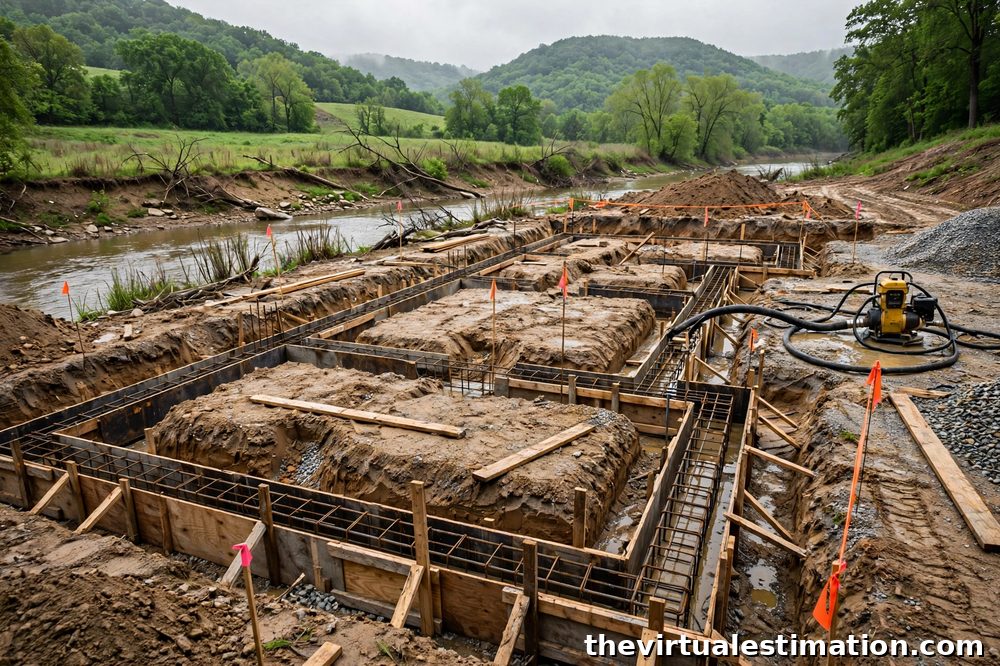
Soils deserve the same lot by lot treatment. Middle Tennessee lots vary enough that a flat earthwork allowance is a guess, not an estimate. Order the geotechnical report, price rock excavation, unsuitable soils, and haul routes from that report, and show the allowance and the assumption on the estimate face. When a client asks why two Nashville lots a mile apart priced differently, the geotech report and the flood map are your answer, and they are a better answer than a lower number with no backup.
Climate adds a second site factor. Nashville summers are hot and humid, winters bring freeze cycles, and severe storms and tornado risk affect schedule, temporary protection, roof, and exterior enclosure choices. Price temporary heat, drying, and weather days honestly for winter and shoulder season work, and do not let a summer productivity rate carry a January enclosure schedule.
Labor in Nashville: tight, and not priced by a national rate
The labor story in Tennessee in 2026 is not a rumor about a shortage. It is a survey result. The Associated General Contractors of America 2026 outlook survey found that 88 percent of Tennessee construction firms reported difficulty hiring hourly craft workers, and 45 percent said they were directly impacted by immigration enforcement issues. In the same survey, 45 percent of Tennessee firms reported larger backlogs than the prior year, 64 percent planned to hire more workers over the next year, and data center work led sector expectations, with 67 percent of firms anticipating increased activity, followed by water and sewer work at 50 percent and hospital work at 38 percent.
For estimating, that means three adjustments. First, carry crew rates from Nashville and Middle Tennessee subcontractor quotes, not from a national average. Second, price supervision, overtime, and schedule float where the crew is the constraint, especially for concrete, framing, electrical, and mechanical scopes. Third, do not assume a second crew is available for acceleration. On a tight job, acceleration is often a premium rate for the same crew, not a second crew at the same rate.
Prevailing wage needs a Nashville specific check too. Tennessee state prevailing wage law applies to highway construction only, at a $50,000 threshold, with no state prevailing wage on non highway public construction. Federal Davis-Bacon rates apply separately to federally funded or federally assisted construction contracts over $2,000. If your job has federal money, pull the wage determination for the correct Tennessee county and construction type and price each classification and fringe separately. Copying a wage rate from another state, or from a highway determination onto a building job, is a fast way to lose a public bid or to win it at a loss.
A GC estimating package for Nashville should therefore show labor as a build up, not a lump: crew composition, hours, burden, supervision, and the source of the rate. When a general contractor can see that build up, they can defend the number to an owner, a lender, and a subcontractor in the same meeting.
How contractors actually bid in Nashville
Nashville bidding rewards contractors who separate the bid into decisions. The strongest bids we see follow a simple order: confirm the code set and the permit path, confirm floodplain and grading triggers, lock the site and earthwork quantities from the geotech report, price the long lead trades first, then fill the remaining trades around that critical path.
That order matters because the long lead trades are where Nashville jobs slip. Electrical gear, mechanical equipment, roofing systems, and specialty finishes can carry lead times that change the schedule, and a schedule change changes general conditions, temporary facilities, and financing. An estimate that lists a unit price but no lead time assumption is only half an estimate in this market.
Subcontractor coverage is the other Nashville reality. On a strong backlog cycle, the best subs are selective. A bid that goes out late, with incomplete drawings, or with a vague scope letter will get fewer and higher prices than the same job sent early with a clean scope, a clear alternates list, and a bid form that matches the takeoff. If you are a general contractor, treat the estimate as a bid management document, not just a cost document. If you are a subcontractor, bid the scope you measured, list your exclusions in plain language, and never let an allowance hide a quantity you could have measured.
Nashville estimating checklist
Use this checklist on every Nashville takeoff before you send a number out. It is the original check we use to keep a Music City bid from drifting into a generic Sun Belt bid.
| Check | What to verify | If you skip it |
|---|---|---|
| Code set | 2024 International Codes as adopted by Metro, plus Downtown Code or overlay review where it applies | Rework, resubmittal, and changed selections after bid |
| Permit path | Valuation fee, tech fee, zoning fee, trade permits, and review time from the current Metro schedule | An understated soft cost and a squeezed schedule |
| Flood and grading | FEMA zone, base flood elevation, floodway status, and grading permit trigger over 10,000 square feet | Fill, elevation, and drainage costs found after award |
| Site and soils | Geotech report, rock, haul route, and utility connections priced lot by lot | Earthwork overruns with no paper trail |
| Labor and wage | Local crew rates, Davis-Bacon determination where federal money applies, and highway only state rule where it does not | A bid that cannot staff or cannot comply |
| Long lead items | Equipment, gear, roofing, and specialty finish lead times tied to general conditions | Schedule slip priced as a surprise |
| Scope clarity | Measured quantities, exclusions, alternates, and allowances shown separately | Bid leveling disputes and change order fights |
What Nashville construction really costs per square foot
Contractors ask for a square foot number, and Nashville gives a wide honest answer. A 2026 guide to custom homes in Middle Tennessee, covering Davidson, Sumner, Robertson, Williamson, Wilson, and Rutherford counties, put true custom home construction at roughly $200 to $350 per square foot, not counting land, with semi custom and production homes lower and luxury homes higher. On a 3,000 square foot plan, that range alone spans $600,000 to $1,050,000 before land.
Use that range as a sanity check, never as a bid. A Gulch high rise condo, a Donelson warehouse, a Franklin custom home, and an East Nashville infill duplex do not share a cost per square foot, and pretending they do is how an estimator loses credibility with a client who already has a real quote. The right move is to run the takeoff, price the trades, and then compare the resulting square foot figure against the range. If your result sits far outside it, find out why before you send it. The reason may be legitimate, such as floodplain fill or a code driven system, but it should be written on the estimate, not discovered by the owner.
For commercial work, the same discipline applies. Industrial asking rents reported by CBRE averaged $10.21 per square foot in the third quarter of 2026, up from $7.98 three years earlier, which tells you tenant economics have tightened even as vacancy rose. A warehouse estimate that ignores dock, racking, sprinkler, and site costs because the shell rate looked familiar will not survive a developer review.
What to send for an accurate Nashville estimate
You will get a faster and tighter Nashville number if you send a complete package the first time. At minimum, send the permitted or bid drawings, specifications, geotech report, survey, flood map or parcel information, and any prior estimate or bid tab you want checked. Add the bid date, the project address and county, the delivery method, and the alternates you want priced separately.
If drawings are incomplete, say so up front and ask for a takeoff with stated assumptions instead of a lump sum that pretends the drawings are complete. A good estimator will list every assumption, every exclusion, and every allowance on the face of the estimate, so the client can see what would change the number and by how much. That transparency is what turns a one time bid into a repeat client in Nashville, where the same developers, general contractors, and owners meet each other on job after job.
Frequently asked questions about estimating in Nashville
Do I need a permit for a renovation in Nashville?
Most construction, renovation, and mechanical work in Nashville requires a permit from the Metro Department of Codes and Building Safety, including new residential and commercial construction and work affecting structural, electrical, plumbing, or mechanical systems. Check the Metro permit list for your exact scope before you start, and carry the trade permits separately from the building permit.
Which building code applies to a new Nashville project in 2026?
Metro Nashville adopted the 2024 International Codes in July 2025, effective July 16, 2025, for plans and applications submitted after that date. Price new work to the 2024 set, and confirm any overlay, Downtown Code, historic, or floodplain review that applies to your parcel.
Why is my Nashville bid higher than a similar job in another Tennessee city?
Three Nashville factors often explain the gap: downtown or overlay review time, floodplain and grading costs tied to a specific parcel, and tighter craft labor in a market with a large East Bank, industrial, and healthcare backlog. A line item estimate will show which factor is driving your number. A square foot rate will not.
Nashville rewards estimators who do the local work: check the code set, check the flood map, check the soils, check the wage determination, and price the crew you can actually hire. Do that, and your bid will read as a Nashville bid, not a national average with a Nashville address on top. When you are ready, send your drawings and project details to The Virtual Estimation at info@thevirtualestimation.com, and ask for a detailed takeoff through our construction estimating services. We will build the quantities, price the trades, and show the assumptions, so you can bid Nashville with a number you can defend.