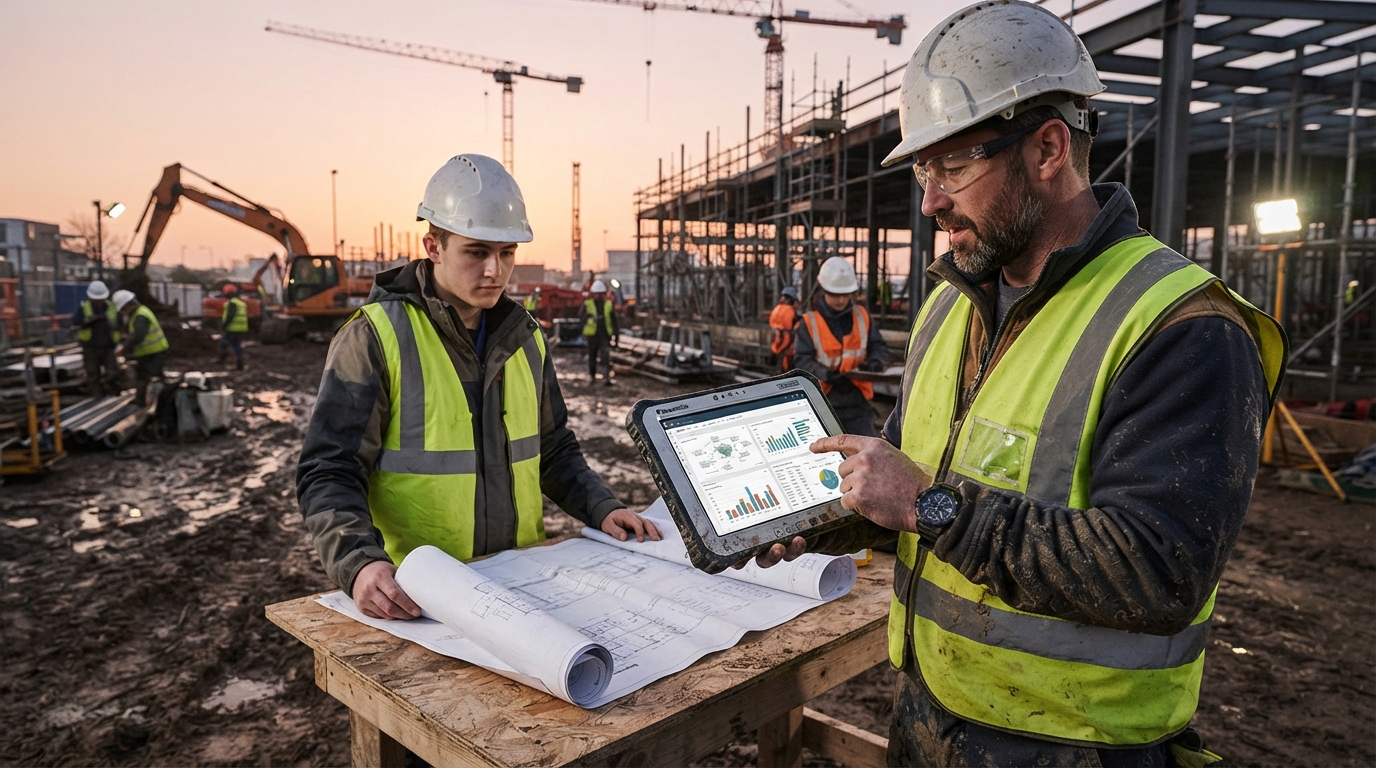

Texas builds more than almost any other state in the country. The construction pipeline across Houston, Dallas-Fort Worth, Austin, and San Antonio runs year-round, and the contractors winning work in those markets are not the ones with the lowest overhead they are the ones with the most accurate bids submitted the fastest.
That is where professional takeoff services come in. A takeoff service measures your drawings, quantifies every material, and delivers the numbers your bid needs. Done right, it costs a fraction of what a missed scope item costs on a lost or underbid project.
This guide covers what takeoff services actually do, why they matter specifically in the Texas construction market, and how to choose the right one for your trade and project type.
For professional construction takeoffs across all Texas markets, contact The Virtual Estimation at info@thevirtualestimation.com or visit our Texas construction estimating page.
What a Construction Takeoff Service Actually Does
A takeoff is the process of measuring construction drawings and quantifying every material the project requires. The word comes from the physical act of taking measurements off paper drawings. Today it happens digitally using tools like Bluebeam, PlanSwift, and STACK, but the process is the same — measure every item, count every piece, and produce a complete quantity list that feeds the estimate.
A professional takeoff service does this work for you. You submit your drawings. The estimator reads the full drawing set, measures every relevant item for the specified trade, applies the correct waste factors, and delivers a quantity list ready to price.
The deliverable is not an estimate with dollar amounts. It is a material quantity list. You apply your own material and labor pricing on top of the quantities. That matters because your pricing reflects your supplier relationships, your local labor rates, and your overhead structure none of which a third-party service knows without your input.
Some services go further and provide full estimates with unit pricing. The Virtual Estimation provides both options depending on what the contractor needs.
Why Texas Specifically Drives High Demand for Takeoff Services
Several factors make professional takeoff services especially valuable in the Texas construction market.
Volume of bidding. Texas contractors bid more projects per month than contractors in most other states because the market is larger and more active. A commercial subcontractor in Houston might chase 15 to 25 bids per month during busy seasons. Estimating that volume in-house without a dedicated estimating team means rushing numbers on most of them.
Speed of the market. Texas general contractors run tight bid schedules. A two-week bid period is standard. A one-week turnaround is not unusual on smaller commercial projects. That timeline leaves little room for a contractor who also manages active projects to sit down and work through a detailed takeoff on every bid.
Scale of projects. Houston and Dallas attract large commercial and industrial projects — data centers, warehouses, medical facilities, mixed-use developments, and hospitality. These projects involve complex drawing sets across multiple trades. A 200,000 square foot warehouse in Garland or a new medical office campus in The Woodlands takes significantly more takeoff time than a residential project of similar dollar value.
Competition. Texas attracts contractors from across the country to its largest markets. To win work competitively, Texas-based contractors need bids that are precise enough to be competitive without being so tight that a scope miss creates a financial problem during construction.
The Texas Construction Market by Region
Texas construction is not one market. It is four distinct regional markets, each with its own activity level, material costs, and labor dynamics.
Houston
Houston is the largest construction market in Texas by volume. The energy sector, the port, and the Texas Medical Center all generate continuous construction demand. Takeoff requirements in Houston span commercial, industrial, healthcare, and high-end residential. MEP takeoffs are especially in demand given the complexity of healthcare and energy-related facilities in the region.
The Houston market also has a large base of specialty subcontractors who bid work across the Gulf Coast region. These contractors need fast, accurate takeoffs to stay competitive across a wide geographic area.
Our Houston construction estimating page covers regional pricing and typical project types in that market.
Dallas-Fort Worth
DFW is the fastest-growing major metro in the country and has been for several years running. Warehouse and distribution construction, office development, and retail construction drive the bulk of the commercial work. The scale of projects in DFW tends to be large — regional distribution centers, corporate campuses, and large mixed-use developments all require detailed takeoffs across multiple trades.
Austin
Austin's tech-driven growth over the past decade created a sustained commercial construction boom. Office, multifamily, hospitality, and data center construction all run simultaneously. Austin also has a significant custom residential market where detailed finish takeoffs for millwork, flooring, and specialty systems add value beyond the standard commercial scope.
San Antonio
San Antonio drives steady commercial, government, and military construction. Joint Base San Antonio generates federal construction work that comes with specific bid requirements including Davis-Bacon prevailing wage compliance. Takeoffs for federal work need to be detailed enough to support certified payroll documentation and formal bid submissions.
What Trades Benefit Most From Professional Takeoff Services in Texas
Every trade benefits from accurate takeoff, but some see a disproportionate return because of the complexity of their measurement work.
MEP trades. Mechanical, electrical, and plumbing takeoffs are among the most time-consuming in construction. Pipe systems, ductwork, conduit runs, and fixture counts across a large commercial drawing set can take a single in-house estimator five to ten days. A professional MEP takeoff service delivers the same scope in 24 to 48 hours.
Our MEP estimating guide covers the breakdown of MEP estimating costs and what a complete takeoff includes.
Concrete and structural. Concrete volume calculations, rebar quantities, and formwork linear footage require careful reading of structural drawings that not every field-oriented concrete contractor has time to do accurately under bid deadline pressure.
The rebar estimating guide and the concrete estimating guide cover what goes into these takeoffs.
Earthwork and site utilities. Cut and fill volumes, trench quantities, and underground utility lengths require reading civil drawings that some site contractors estimate by experience rather than by calculation. On a large commercial site in Texas with significant grade changes, a volume error of 10 percent can mean 5,000 extra cubic yards of import or export material that was not in the bid.
The earthwork estimating guide and the underground utilities guide explain the measurement methods professional estimators use.
Framing and drywall. Texas has a large base of framing and drywall subcontractors. Stud counts, sheathing areas, and board counts from complex architectural drawings take significant time even for experienced crews. Many framing and drywall contractors in Texas use takeoff services specifically so their project managers can spend time running jobs rather than counting studs.
The Cost of Not Using a Professional Takeoff Service
The real cost of estimating your own takeoffs is not just the time you spend on it. It is the cost of doing it wrong when you are pressed for time.
A missed scope item on a commercial concrete bid in Dallas could mean absorbing $15,000 to $40,000 in extra material cost during construction. A wrong waste factor on a large drywall job in Houston adds boards you did not price. A miscounted panel schedule on an electrical bid in Austin leaves you installing breakers you did not include.
These are not hypothetical problems. They happen on real projects when estimators work fast under deadline pressure without the right tools and without dedicated focus on the drawings.
The cost of a professional takeoff service for most commercial projects runs $150 to $2,000 depending on scope and project size. That is real money. But it is a fraction of the cost of one missed scope item on any project above $100,000.
What to Give a Takeoff Service for Best Results
The quality of the takeoff you receive depends heavily on what you submit. These are the things that make the biggest difference.
Complete drawing sets. Submit every sheet relevant to your trade. A structural set without the foundation plan, or a mechanical set without the equipment schedule, forces the estimator to make assumptions that reduce accuracy. Complete sets produce complete takeoffs.
Current drawings. Submit the most recent addendum. Outdated drawings produce quantities for work that may have been revised. Always confirm the drawing revision date before submitting.
Scope clarification. If your scope has specific inclusions or exclusions you install ductwork but not equipment, or you furnish pipe but not hangers state that clearly when you submit. A well-defined scope produces a takeoff that matches what you are actually bidding.
Specifications. The specification defines pipe material, duct gauge, concrete mix design, and dozens of other details that change material costs. Submit the relevant specification sections alongside the drawings.
Outsource vs In-House: The Texas Contractor's Real Choice
Most Texas contractors who have grown beyond a single-project operation face the same question at some point: hire a full-time estimator or outsource takeoffs as needed?
The math on this is straightforward. A mid-level construction estimator in Texas earns $70,000 to $95,000 base salary plus benefits, software, and overhead that brings the true annual cost to $100,000 to $135,000. That estimator can handle roughly 8 to 12 detailed takeoffs per month working full time without other responsibilities.
Outsourcing at $300 to $1,500 per takeoff becomes more economical than a full-time hire at any bid volume below 10 to 12 complex projects per month. Most Texas subcontractors operate below that threshold for most of the year, with spikes during busy seasons when additional capacity is needed.
The hybrid approach works well for many Texas contractors: one senior estimator handles bid strategy, client relationships, and scope review while the takeoff measurement work goes to a service. This keeps the in-house team focused on high-value activities while the detailed counting work gets done accurately and on time.
Our outsource vs in-house comparison guide covers the full cost breakdown in detail.
How The Virtual Estimation Serves Texas Contractors
The Virtual Estimation provides professional construction takeoffs for contractors across all Texas markets including Houston, Dallas, Fort Worth, Austin, San Antonio, El Paso, Lubbock, Amarillo, Corpus Christi, and all 254 Texas counties.
We cover every major construction trade including MEP, concrete, structural steel, lumber and framing, roofing, drywall, sitework, earthwork, underground utilities, painting, flooring, and millwork. Most Texas projects receive takeoff delivery within 24 to 48 hours of drawing submission.
Our pricing reflects current Texas market conditions including regional material costs and local labor rates for your specific county. Estimates are delivered in bid-ready Excel format organized by CSI MasterFormat division, which is accepted by all Texas general contractors without reformatting.
Submit your drawings to info@thevirtualestimation.com and receive a flat-rate quote within one hour. Visit our Texas construction estimating page for more information on regional coverage.
Frequently Asked Questions
How fast can I get a takeoff for a Texas project?
Most residential and small commercial single-trade takeoffs are delivered within 24 hours. Mid-size commercial full takeoffs deliver in 48 to 72 hours. Large commercial and industrial projects are scoped individually for timeline. Rush service is available for projects with tight bid deadlines.
Do you cover projects outside the major Texas metros?
Yes. The Virtual Estimation covers all 254 Texas counties including smaller markets like Midland, Odessa, Laredo, McAllen, and Beaumont. Regional material pricing adjustments are applied for projects outside the major metros where supplier pricing differs from the Houston or Dallas market rates.
Can you handle Texas prevailing wage projects?
Yes. Federal and state-funded construction projects in Texas that trigger Davis-Bacon prevailing wage requirements can be estimated with the correct wage determination rates for each Texas county. Confirm the project funding source and the applicable wage determination when you submit drawings.
What trades do you cover for Texas projects?
All major commercial and residential construction trades including MEP, concrete, structural, framing, drywall, roofing, sitework, earthwork, utilities, painting, flooring, millwork, glazing, and specialty trades. If your trade is not listed, contact us to confirm coverage before submitting.
How do I get started?
Email your drawings in PDF, DWG, AutoCAD, or Revit format to info@thevirtualestimation.com. Include the project name, location, and trade scope you need estimated. We send a flat-rate quote within one hour. Once approved, takeoff delivery begins immediately.