Residential vs Commercial Construction Estimating Differences Every Contractor Must Know
Admin
February 16, 2026
Residential vs Commercial Construction Estimating
Construction estimating determines project profitability before work begins.
Residential and commercial projects require different estimating strategies.
Contractors who treat both the same often face cost overruns, delays, and lost bids.
Understanding these differences strengthens pricing accuracy and project control.
Introduction
The US construction market continues to expand across housing, retail, healthcare, and industrial sectors.
At the same time, material pricing fluctuates and labor productivity varies by project type.
Estimating must reflect these realities.
Residential estimating focuses on speed and standardized methods.
Commercial estimating demands detailed analysis and strict documentation.
Choosing the correct estimating approach protects your margins.
Project Scope and Size Differences
Project scale drives estimating complexity.
Residential projects typically include:
- Single family homes
- Townhouses
- Duplexes
- Small renovations
- Low rise buildings
Commercial projects typically include:
- Office buildings
- Retail centers
- Hospitals
- Schools
- Warehouses
- Multi story structures
Commercial construction involves larger structures, more systems, and higher coordination requirements.
This increases estimating workload and risk exposure.
Design Complexity and Documentation
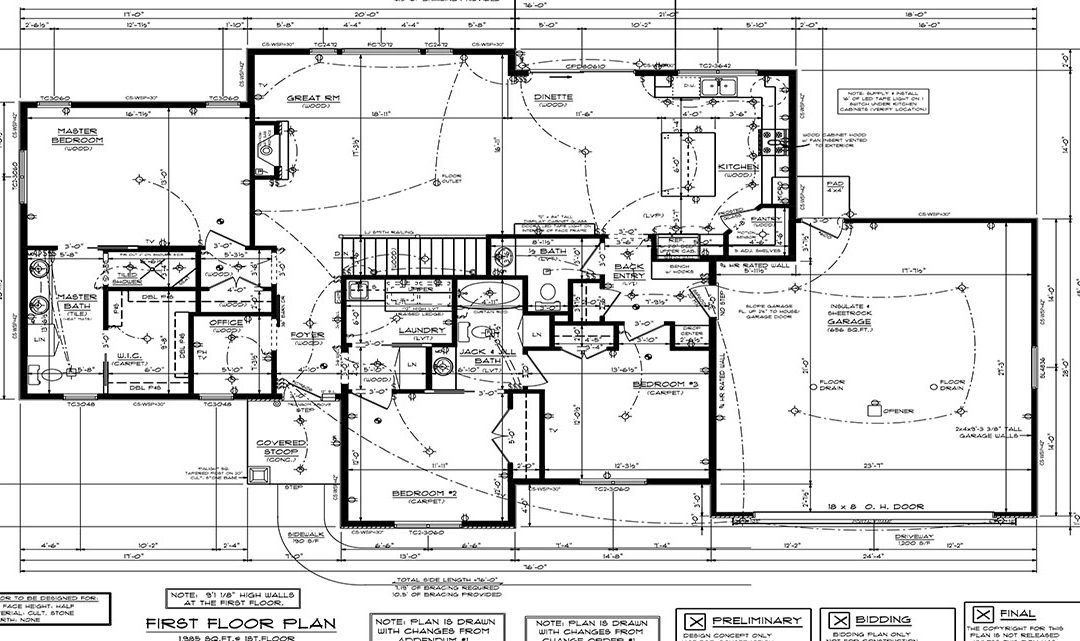
Residential construction drawings remain simpler in structure and systems.
Typical residential plans include:
- Architectural drawings
- Basic structural details
- Limited mechanical systems
Commercial construction requires extensive documentation.
Commercial plans often include:
- Architectural design sets
- Structural engineering drawings
- Mechanical system layouts
- Electrical distribution plans
- Plumbing systems
- Fire protection systems
- Site development drawings
- Specification manuals
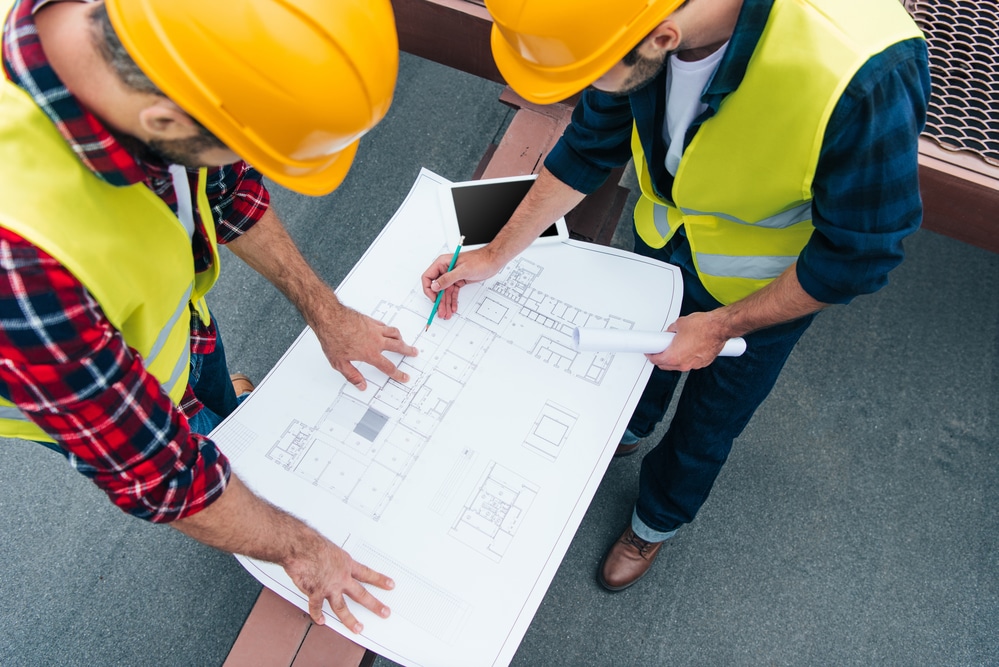
Estimators must review multiple drawing packages to capture full scope.
Incomplete review leads to major cost gaps.
Material Specifications and Quality Standards
Material selection differs significantly between sectors.
Residential construction commonly uses:
- Wood framing
- Asphalt shingles
- Standard insulation systems
- Residential grade fixtures
- Lightweight materials
Commercial construction uses materials designed for durability and compliance.
Examples include:
- Structural steel framing
- Reinforced concrete systems
- Commercial roofing assemblies
- Fire rated assemblies
- High capacity HVAC systems
- Specialized finishes
Commercial materials require precise quantity takeoffs and accurate pricing data.
Material performance requirements also influence cost.
Labor Productivity and Workforce Requirements
Labor productivity varies between residential and commercial projects.
Residential construction benefits from:
- Repetitive building methods
- Smaller crews
- Faster installation cycles
- Simplified coordination
Commercial construction requires:
- Trade specialization
- Union labor in many regions
- Safety compliance procedures
- Complex installation sequencing
These factors increase labor hours and cost calculations in commercial estimates.
Estimators must apply sector specific production rates.
Building Codes and Regulatory Requirements
Residential construction follows local building codes designed for housing structures.
Commercial construction must meet stricter regulatory standards.
Commercial compliance areas include:
- Fire safety systems
- Accessibility standards
- Energy efficiency requirements
- Structural load regulations
- Occupancy classifications
Regulatory compliance adds material, labor, and inspection costs.
Accurate estimating requires code knowledge for each project location.
Estimating Methods and Cost Structure
Residential estimating often uses unit based pricing and historical cost data.
Common residential estimating methods include:
- Square foot pricing
- Assembly based estimating
- Standard material packages
Commercial estimating requires detailed cost breakdowns.
Commercial estimates typically include:
- Division based cost structure
- Detailed quantity takeoffs
- Equipment cost analysis
- General conditions pricing
- Project duration cost impact
This structured approach improves accuracy for complex projects.
Risk Factors in Residential vs Commercial Estimating
Risk exposure differs significantly between sectors.
Residential risk factors include:
- Material price fluctuations
- Subcontractor availability
- Client driven design changes
Commercial risk factors include:
- Contractual obligations
- Project delays penalties
- Coordination between multiple trades
- Inspection and compliance delays
- Equipment and logistics planning
Higher risk requires deeper cost analysis and contingency planning.
Bid Preparation and Documentation Requirements
Residential bids often include simplified cost summaries.
Commercial bids require formal documentation.
Commercial bid packages commonly include:
- Detailed cost breakdowns
- Scope clarifications
- Schedule assumptions
- Compliance documentation
- Value engineering options
Professional presentation influences bid evaluation.
Accurate documentation supports contractor credibility.
Technology and Estimating Tools
Residential estimating often relies on standardized templates.
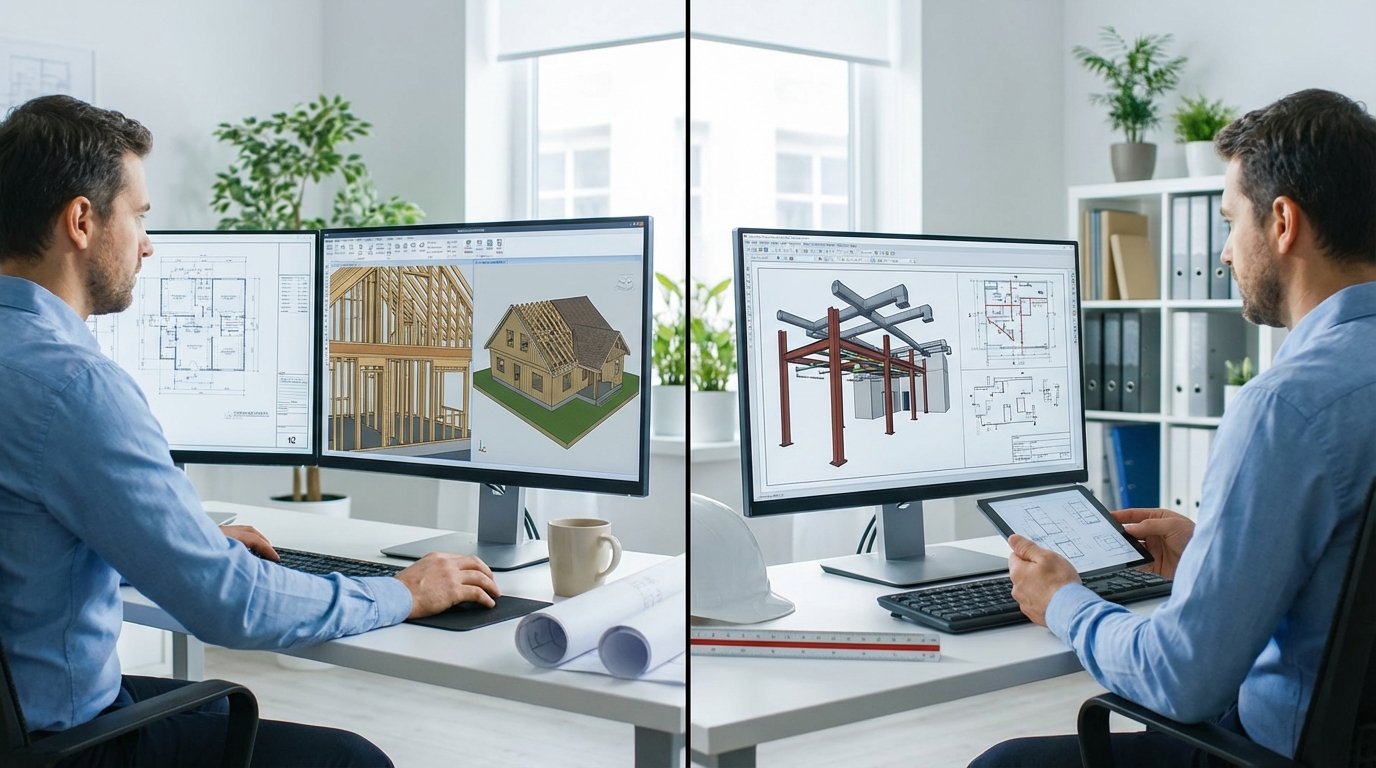
Commercial estimating uses advanced digital workflows.
Modern estimating technology supports:
- Digital plan measurement
- Trade specific quantity tracking
- Cost database integration
- Schedule linked cost modeling
Technology improves accuracy across both sectors but becomes essential for commercial projects.
Common Estimating Mistakes Contractors Make
Contractors often apply residential estimating methods to commercial work.
This creates serious pricing errors.
Common mistakes include:
- Underestimating labor complexity
- Missing mechanical and electrical scope
- Ignoring regulatory cost impact
- Using incorrect production rates
- Rushing quantity takeoffs
Professional estimating reduces these risks.
Why Accurate Estimating Determines Profitability
Estimating accuracy directly affects project outcomes.
Accurate estimates help you:
- Submit competitive bids
- Control construction costs
- Plan material procurement
- Allocate labor efficiently
- Protect profit margins
Poor estimates create financial pressure throughout the project lifecycle.
How Professional Estimating Support Improves Results
Professional estimating services provide structured analysis for both residential and commercial projects.
You gain:
- Detailed quantity takeoffs
- Trade specific cost analysis
- Organized estimate reports
- Faster bid preparation
- Reduced estimating workload
Specialized support strengthens bid performance.
How The Virtual Estimation Supports Contractors
The Virtual Estimation provides accurate residential and commercial construction estimating services across the United States.
Our estimating team supports:
- General contractors
- Subcontractors
- Home builders
- Developers
Services include:
- Residential construction estimates
- Commercial cost estimation
- Material takeoff services
- Quantity takeoffs by CSI division
- CPM scheduling support
Why contractors choose The Virtual Estimation:
- Accurate quantity measurement from project plans
- Fast turnaround aligned with bid deadlines
- Cost savings compared to in house estimators
- Clear and organized estimate reports
- Scalable estimating support
You receive estimates structured for real construction conditions.
Benefits of Choosing the Right Estimating Approach
Understanding estimating differences improves business performance.
You gain:
- Accurate pricing aligned with project complexity
- Reduced financial risk
- Better project planning
- Stronger client confidence
- Increased bid success rate
Correct estimating methods support sustainable growth.
Conclusion
Residential and commercial construction estimating require different strategies, cost structures, and technical knowledge.
Residential estimating focuses on speed and standardized methods.
Commercial estimating demands detailed analysis, compliance awareness, and structured cost modeling.
Contractors who understand these differences price projects more accurately and protect profit margins.
Professional estimating support strengthens accuracy across both sectors.
About the Author
Our team of construction estimation experts brings years of industry experience to provide accurate, reliable, and insightful content for contractors, builders, and construction professionals.