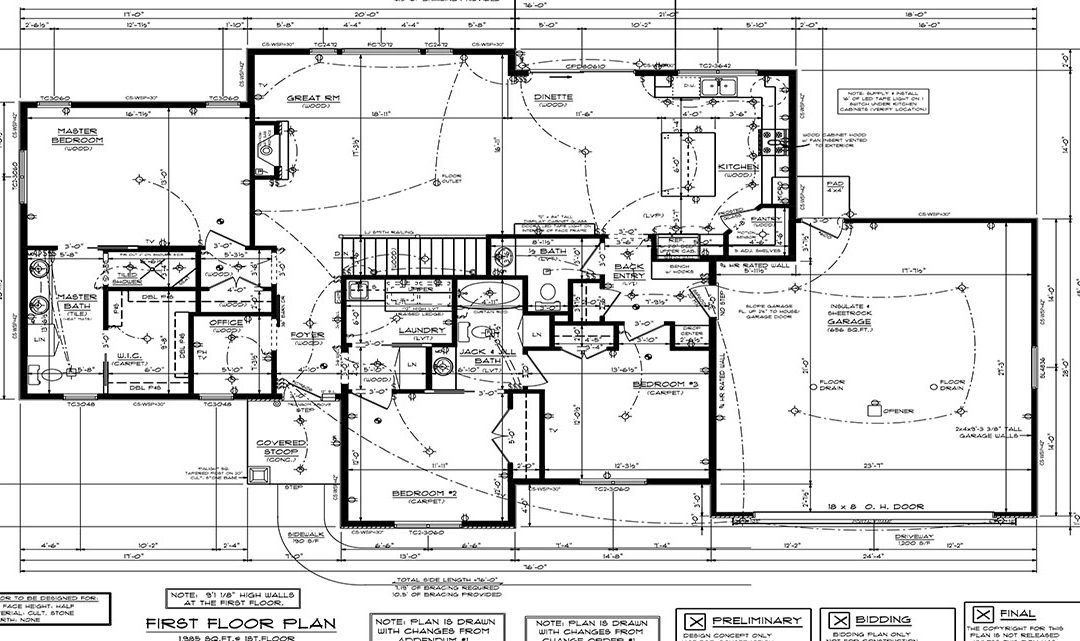
The Ultimate Guide to Material Takeoffs: From Blueprint to Bid
Admin
October 25, 2025

In the world of construction, every profitable project is built on a foundation of numbers. Before the first trench is dug or the first frame is erected, a critical process must occur: the material takeoff. This meticulous accounting of every single component needed for a project is the bedrock of an accurate estimate, a competitive bid, and a profitable job.
Get it right, and you have a clear roadmap for purchasing, scheduling, and budgeting. Get it wrong, and you risk devastating cost overruns, project delays, and a damaged reputation.
At The Virtual Estimation, we live and breathe the details that make or break a project. This comprehensive guide will walk you through the entire material takeoff process, sharing the methods and insights we use to deliver precision for our clients every day.
What Exactly is a Material Takeoff?
A material takeoff (MTO), also known as a quantity takeoff (QTO) or "quantity surveying," is the process of analyzing construction blueprints and specifications to identify and quantify all the materials required to complete a project.
This isn't just about counting the big items. It’s a granular inventory of everything from the cubic yards of concrete in the foundation to the number of screws needed for the drywall, the linear feet of copper pipe, and the gallons of paint for the final finish.
Why a Flawless Takeoff is Non-Negotiable
Many contractors, especially when busy, are tempted to rush this stage or rely on "rules of thumb." This is one of the most expensive mistakes you can make. A precise material takeoff directly impacts:
- Bid Accuracy: An accurate material list is the largest component of your cost base. Without it, your bid is a guess.
- Profitability: Underestimating materials means you pay for the shortfall out of your profit. Overestimating leads to wasted capital, return fees, and disposal costs.
- Competitiveness: When you know your material costs down to the last screw, you can submit a sharper, more confident bid without adding unnecessary "cushion" that prices you out of the running.
- Project Efficiency: A detailed MTO is a powerful project management tool. It informs your purchasing schedule, delivery logistics, and on-site storage plan, preventing costly delays caused by material shortages.
The Step-by-Step Material Takeoff Process
Executing a professional material takeoff requires a systematic approach. Follow these steps to ensure nothing is missed.
Before you count a single item, gather and thoroughly review all project documents:
- Architectural Drawings: Floor plans, elevations, sections, and detail sheets.
- Structural Drawings: Foundation plans, framing plans, and structural details.
- MEP Drawings: Mechanical, Electrical, and Plumbing plans.
- Specifications Manual (Spec Book): This is critical! The drawings show you the quantity, but the spec book tells you the quality and type of material (e.g., a specific brand of windows, a certain grade of lumber, a particular PSI of concrete).
Read the scope of work carefully. Are you bidding on the entire project or just a specific division, like concrete or framing? Clarify this first.
- Manual Takeoff: The traditional method using printed blueprints, architectural scales, colored pencils, and spreadsheets. It's functional for very small projects but is incredibly time-consuming and highly prone to human error.
- Digital Takeoff: The modern standard. Using specialized software (like Bluebeam, PlanSwift, or others), you work with digital blueprints. The software allows you to trace and measure elements directly on the screen, and it automatically calculates quantities, areas, and volumes. This method is exponentially faster, more accurate, and creates a clear digital record.
Don't jump around the plans randomly. The best practice is to follow the standard CSI (Construction Specifications Institute) MasterFormat divisions. This provides a logical order and ensures no category is overlooked.
A typical workflow might look like this:
- General Conditions: Account for dumpsters, temporary fencing, portable toilets, etc.
- Sitework (Division 31): Calculate soil excavation and backfill (cubic yards), erosion control (linear feet), and gravel for the sub-base (tons/cubic yards).
- Concrete (Division 03): Quantify footings, slab-on-grade, and walls (cubic yards of concrete), rebar (linear feet/tons by size), and formwork (square feet).
- Masonry (Division 04): Count the number of CMU blocks and bricks (by type), and calculate mortar and grout (cubic feet).
- Structural Steel & Framing (Divisions 05 & 06): List steel beams by size and length. Count every stud, joist, header, and calculate sheathing (number of sheets).
- Exterior Finishes (Divisions 07 & 09): Calculate roofing, siding, and exterior trim (square feet/linear feet).
- Interior Finishes (Division 09): Quantify insulation (square feet), drywall (number of sheets), flooring (square feet), paint (gallons, calculated from wall/ceiling surface area), and trim (linear feet).
Continue this methodical process for every trade—doors, windows, plumbing fixtures, electrical devices, etc.
This is what separates an amateur from a professional. A complete takeoff includes not just the primary materials but also the necessary accessories and consumables:
- Fasteners: Nails, screws, bolts, and anchors.
- Adhesives & Sealants: Construction adhesive, caulking, sealant.
- Connectors: Joist hangers, hurricane ties, anchor bolts.
- Waste Factor: No project uses 100% of the material ordered. You must add a waste factor to account for offcuts, damage, and minor errors. This varies by material (e.g., 5-10% for lumber, 10-15% for tile).
Once your list is complete, the work isn't over.
- Peer Review: If possible, have a second person review your work. A fresh set of eyes can catch simple mistakes.
- Check Against Specs: Go back to the spec book one last time. Does your takeoff for "windows" match the specified manufacturer and model number?
- Create a Final Summary: Organize your final quantities into a clean, easy-to-read spreadsheet. Group items by material type or CSI division. This organized list is what you will send to your suppliers for pricing.
The Professional Advantage: When to Outsource Your Takeoff
As you can see, a proper material takeoff is an incredibly detailed and time-intensive task. For many contractors, the time spent on takeoffs is time not spent managing projects, finding new work, or supervising crews.
Consider partnering with a professional service like The Virtual Estimation when:
- You are too busy: Your time is more valuable when focused on business growth and project execution.
- Projects are large or complex: The risk of a costly error on a large-scale project is too high to handle in-house.
- You lack the right software: We invest in cutting-edge digital takeoff software to ensure maximum accuracy and efficiency.
- You need a second opinion: Use our takeoff to validate your own estimate before submitting a high-stakes bid.
By outsourcing, you leverage the expertise of a dedicated team whose sole focus is producing precise, reliable, and fast material takeoffs. You get the accuracy you need, the time you want back, and the confidence to bid more competitively.
Ready to build your next bid on a foundation of certainty? Contact The Virtual Estimation today, and let our experts handle the details, so you can focus on building.
About the Author
Our team of construction estimation experts brings years of industry experience to provide accurate, reliable, and insightful content for contractors, builders, and construction professionals.