Blueprint Basics: A Contractor's 5-Step Guide to Reading Construction Plans
Admin
October 24, 2025

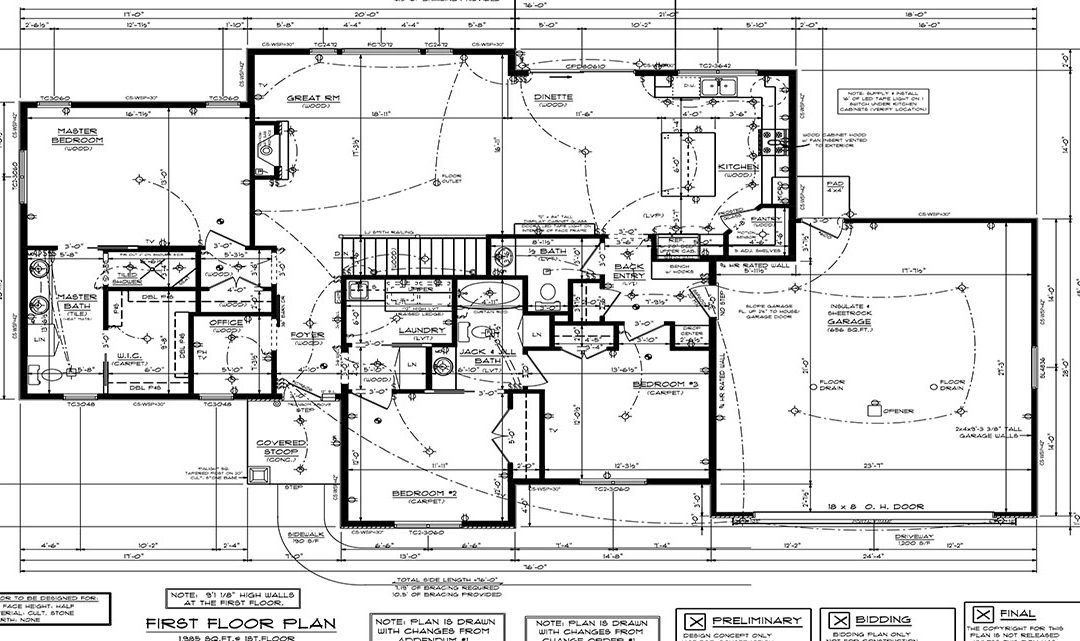
To a contractor, a set of construction blueprints is more than just paper and ink; it's the instruction manual for the entire project. The ability to read, understand, and interpret these documents with 100% confidence is the most fundamental skill in construction. It's the difference between a profitable build and a project plagued by errors, rework, and disputes.
Whether you're a seasoned pro looking for a refresher or a new builder just starting, this guide from The Virtual Estimation will walk you through the 5 essential steps to dissecting any set of construction plans.
Step 1: Start with the Big Picture - The Title Block & Drawing Index
Don't just jump to the floor plan. Every professional set of drawings has a title block, usually in the bottom right corner of the first page. This is your project's ID card. It contains:
- Project Name and Address
- Architect/Engineer's Name and Contact Info
- Drawing Date and Revision Dates (Crucial!)
- Sheet Number
Next, find the Drawing Index. This is the table of contents for the entire set. It will list every sheet and its title (e.g., A-101: Floor Plan, S-201: Foundation Plan, E-501: Electrical Plan). This gives you a roadmap of the entire package.
Step 2: Understand the Language - The Legend & Abbreviations
Every line and symbol on a blueprint has a specific meaning. The Legend or Symbol Library is your dictionary. This sheet will show you what a specific type of window, door, electrical outlet, or material hatch looks like. Never assume you know what a symbol means; always check the legend first. The same goes for the list of Abbreviations (e.g., "O.C." for On Center, "W.D." for Wood Door).
Step 3: Read the Scales & Dimensions
A blueprint is a scaled-down representation of the final building. The scale (e.g., 1/4" = 1'-0") tells you how to translate measurements on the paper to real-world dimensions.
Crucial Rule: Always trust the written dimensions over measuring the drawing with a scale ruler. The printed dimension is the intended size. The drawing may have minor scaling inaccuracies. Follow the dimension lines to see exactly what they are measuring.
Step 4: Connect the Views - Plans, Elevations, and Sections
A project is shown in multiple views to provide a complete 3D picture on 2D paper:
- Plan View: A bird's-eye view looking down, showing the layout of a floor (e.g., Floor Plan, Foundation Plan).
- Elevation View: A view of the building from the outside, looking straight at one side (e.g., North Elevation, South Elevation). This shows exterior finishes and heights.
- Section View: A view of the building as if it were cut in half. This is critical for understanding the construction assembly, showing how walls, floors, and roofs connect.
Look for section markers and elevation tags on the floor plan. These will tell you which drawing sheet shows that specific view.
Step 5: Dive into the Details & Notes
The real meat of a project is often in the details. Look for callouts, which are circles or bubbles pointing to a specific part of the drawing. These callouts will direct you to a larger-scale detail drawing on another sheet that shows exactly how that component should be assembled.
Finally, read all the general notes and specifications. These text blocks provide critical information about materials, installation methods, and quality standards that aren't shown in the drawings themselves.
From Reading to Estimating
Once you can confidently read a set of plans, you can begin the process of an accurate takeoff. By systematically going through each page and applying these steps, you can account for every material and labor component required.
Feeling overwhelmed by a complex set of plans? The experts at The Virtual Estimation live and breathe blueprints. We can handle the entire takeoff process for you, ensuring no detail is missed. Contact us to ensure your bid is built on a flawless interpretation of the plans.
About the Author
Our team of construction estimation experts brings years of industry experience to provide accurate, reliable, and insightful content for contractors, builders, and construction professionals.