Dallas Runs on Growth, and Growth Changes Every Line Item
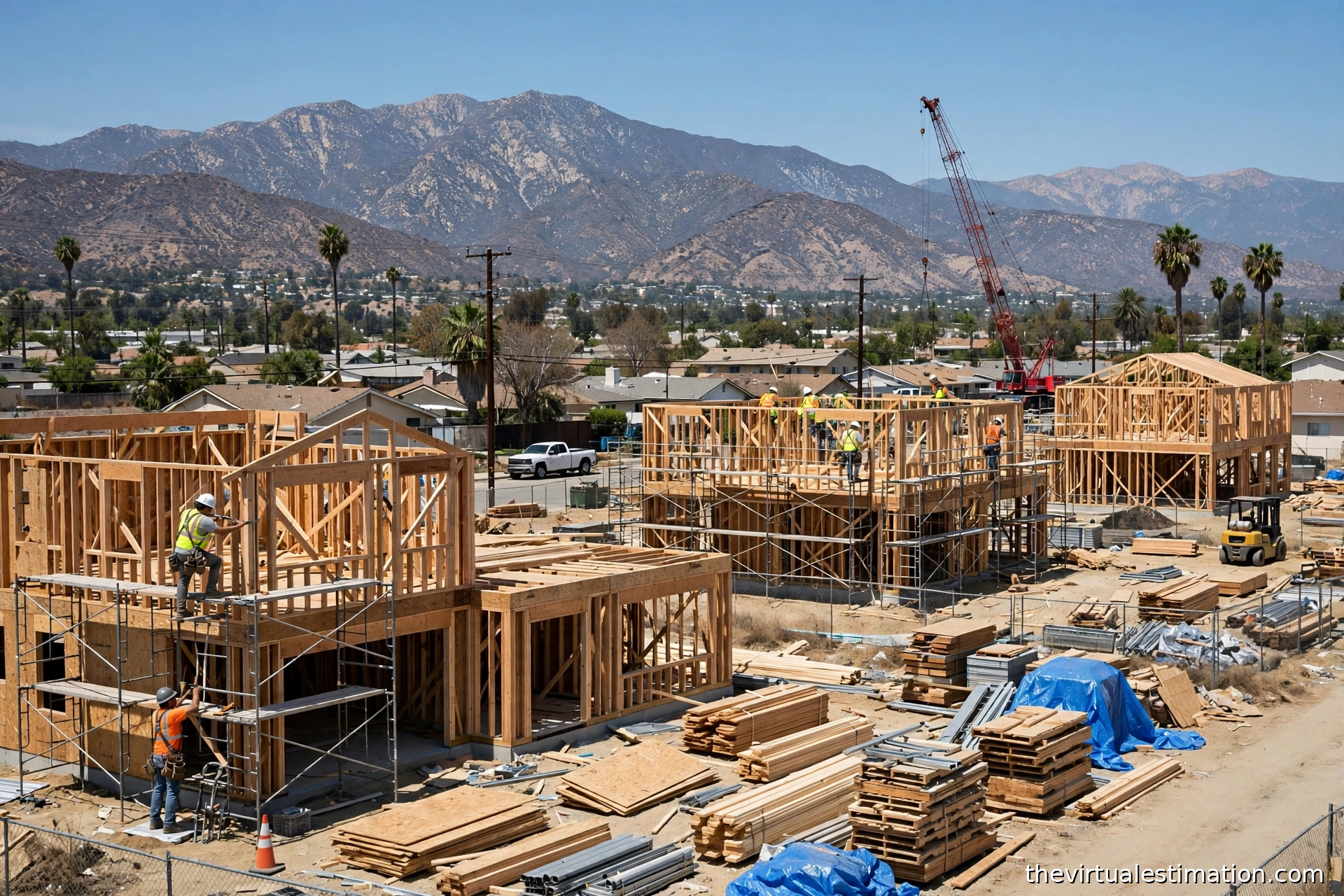
Dallas-Fort Worth is the most construction-hungry metro in America right now, and it is not close. The region added more than 100,000 new residents in the past year. JLL's first-half 2026 report puts DFW ahead of Northern Virginia as the largest data center market in the world: 4,587 megawatts of existing inventory, 3,202 megawatts under construction, and vacancy under one percent. The DART Silver Line opened in October 2025, connecting Plano to DFW Airport through ten stations. Corporate campuses keep landing in Frisco, Plano, and Irving, and the suburbs keep marching north toward McKinney and Denton.
All of that demand is the good news. The bad news for your estimate is that Dallas punishes anyone who prices it like a generic Sun Belt market. Three things break imported numbers here: the ground itself, the weather above it, and a permit system that charges you as a percentage of what you build. If your numbers came from Austin, Houston, or a national cost database without local adjustment, you will be low on foundations, thin on weather contingency, and wrong on fee schedule math. Here is how to build a Dallas estimate that survives contact with Dallas.
Working with a team that prices Dallas every week helps, which is why many GCs outsource to construction estimating services that carry live DFW sub pricing instead of national averages.
2026 Dallas Cost Benchmarks You Can Actually Use
Start with order-of-magnitude numbers, then adjust. Dallas construction cost escalation ran 3.88% annually in the second quarter of 2026, per Rider Levett Bucknall: stable, predictable, but not flat. The pressure comes from rising labor costs, fuel and transportation, and tight subcontractor availability, not broad material shortages. Anything priced off 2024 benchmarks needs escalation and a hard look at MEP sub pricing, because data center work is eating the best electrical and mechanical crews in the metro.
The table below collects contractor-published planning ranges for DFW. Treat them as sanity checks for your takeoffs, not contract pricing.
| Project Type | Typical Dallas Range ($/SF) | What Drives the Spread |
|---|---|---|
| Office | $190 to $330 | Class A finishes, parking structure, site work |
| Medical / healthcare | $270 to $440 | MEP density, imaging and surgical suites |
| Industrial / warehouse | $130 to $250 | Clear height, ESFR sprinklers, office percentage |
| Warehouse shell hard cost | $75 to $150 | Tilt-wall vs. PEM, dock packages |
| Multifamily / mixed-use | $200 to $350 | Podium vs. garden, amenity package |
| Retail / restaurant | $210 to $370 | Kitchen equipment, grease and venting |
| Tenant improvement | $60 to $250 | Basic office vs. complex medical or lab |
| New residential | $170 to $215 | Production vs. semi-custom finishes |
Two metro quirks sit inside those ranges. First, multifamily and residential pricing ladders sharply from the Dallas core to the northern suburbs, so a Frisco number is not a Dallas number. Second, Dallas's numbers consistently run below Austin's within Texas, but above Houston's, so do not borrow across metros without adjusting. Square-foot benchmarks validate a takeoff; they never replace one.
The Clay Beneath the Numbers
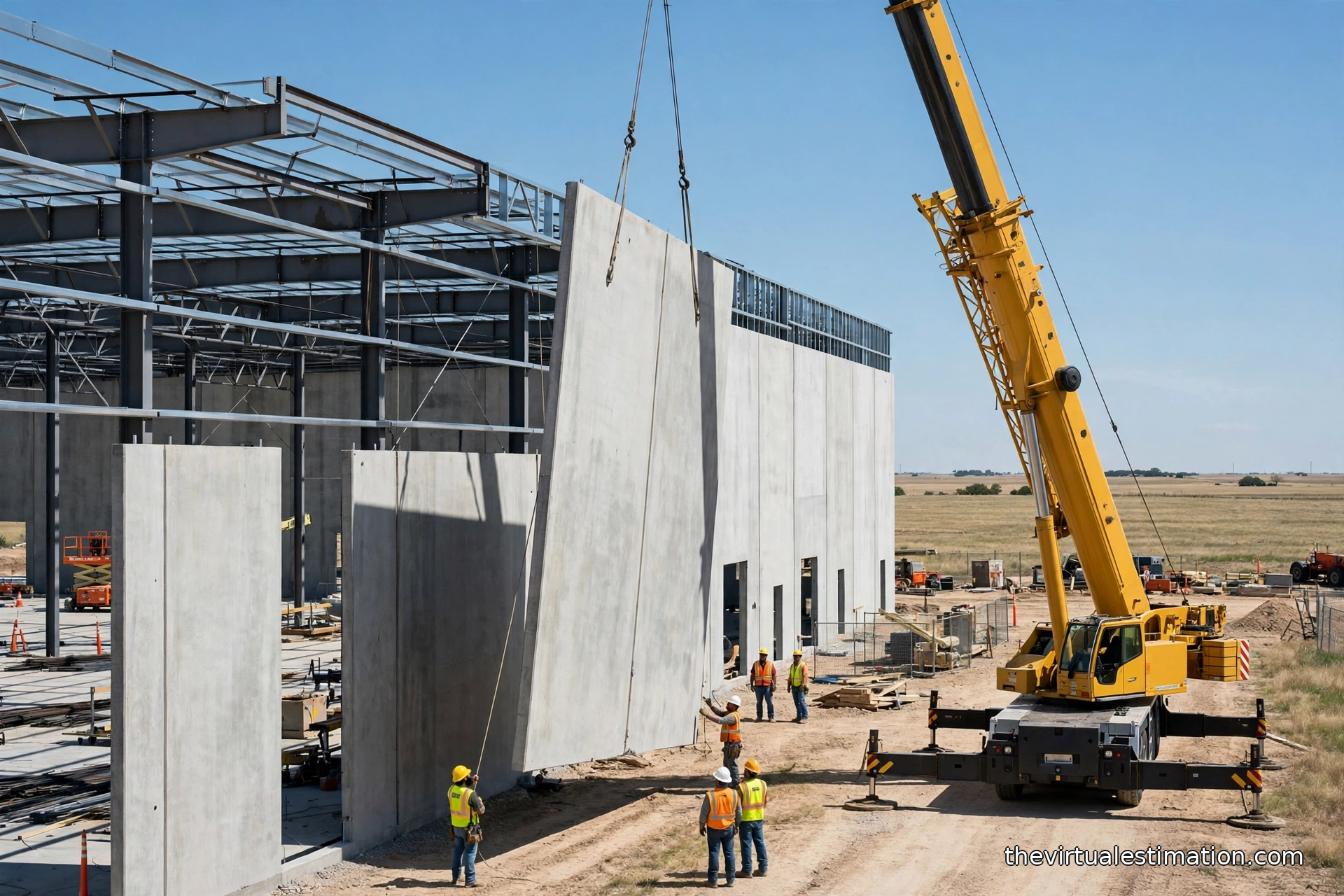
Most of the Metroplex sits on Blackland Prairie clay, a montmorillonite soil that can swell up to 30 percent when it gets wet and shrink back when it dries. That movement is soil science, not bad workmanship, and it is why Dallas foundations cost more than the national average for the same building. A standard slab-on-grade that works fine in Phoenix will crack here. Local geotechnical investigation is effectively mandatory: the International Building Code requires a soils report where expansive or questionable soils exist, and DFW qualifies on both counts.
What that means on a takeoff: drilled piers or post-tensioned slabs with stiffened grade beams are the default answer on anything with real load, not an upgrade. Carry a geotechnical report allowance on every bid (budget roughly $5,000 to $8,000 for a typical commercial site), and price the foundation system the report will call for, not the one you wish the site had. Summer 2026 brought a 66-day dry spell to Dallas, and drought periods move foundations; if you are bidding repair or remodel work, check for existing movement before you price cosmetic finishes. The soil is the single biggest reason a Dallas estimate diverges from a Houston or Austin one, so do this work first and size everything downstream from it.
Weather That Stops Work and Breaks Budgets
Dallas-Fort Worth is the most active severe-weather zone in Texas, and hail is the headline risk. Texas led the nation in hail damage for the eleventh straight year in 2025, with 902 major-damage hail events, and one major carrier processed more than 95,000 Texas hail claims that year at an average payment near $15,000. On your estimate, that means impact-rated roofing and hail-resistant cladding are not value-engineering options on commercial work; they are the spec. Insurance-driven scope on roofs, skylights, and rooftop equipment shows up on almost every Dallas bid.
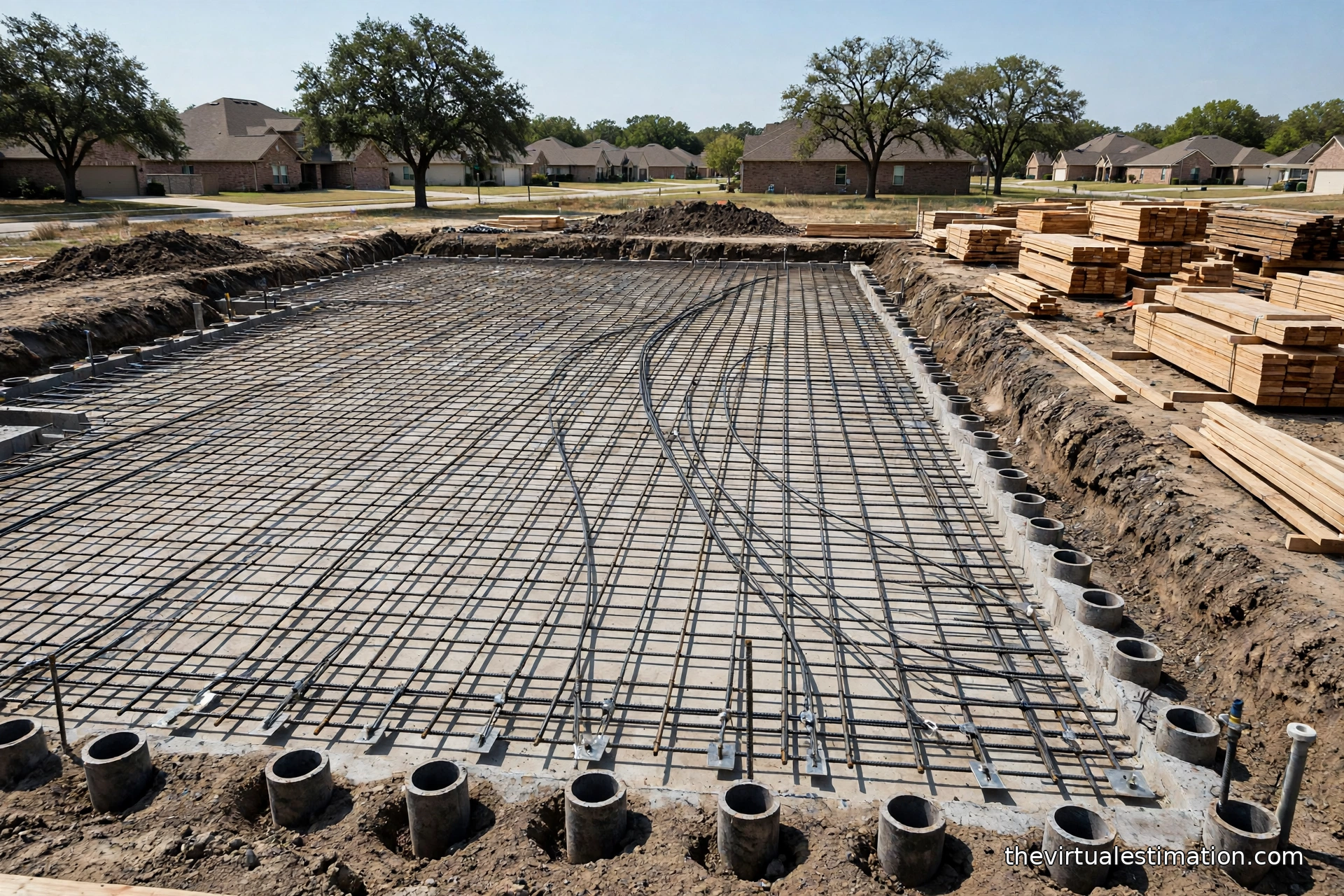
Then there is the heat and the wind. Summer 2026 logged 52 days at or above 100 degrees in Dallas, and that kind of summer changes your schedule: concrete goes down in early-morning pours with curing measures, crews lose productive hours in the afternoon, and OSHA heat precautions are a line item. Spring supercell season brings wind gusts over 60 miles per hour, and gusts like that routinely stop crane and steel-erection work. Carry schedule contingency for spring weather delays on anything with a crane on site, and price concrete placement premiums for June through September pours. None of this is exotic. It is just Dallas, and the estimators who win here price it.
Permits in Dallas: Valuation-Based Fees and Faster Turnarounds
Dallas charges for permits as a percentage of construction value, so budget fees as a percentage, not a flat number. Commercial permit fees use the ICC valuation table with a sliding multiplier schedule, and the plan review fee adds another 65 percent of the building permit fee on top, plus a $33.10 administrative fee at application. Typical all-in numbers: around $1,500 for a new single-family home, about $1,000 for a residential addition, roughly $9,000 for a commercial addition or remodel, and near $56,000 for a new multifamily complex. Certificates of occupancy run $375 and excavation permits $2,825. Fees ticked up about 2.94 percent at the start of 2025, with further changes mid-year.
The good news is the review clock has improved dramatically. After the planning department overhaul, Lean Six Sigma review work, and the new Q-Team express pathway, median issuance time for new commercial construction fell from 276 days in 2023 to 189 days in 2024. Current targets: 7 to 14 days for initial review on new commercial, about 2 days for residential, and a 3-day express initial review through Q-Team with a 5-day resubmittal goal. A new online permitting system launched in May 2025. The estimating takeaway is split: carrying costs on general conditions are falling because review times are now measured in days, but commercial new construction still takes roughly six months median to issue, so hold escalation and general-conditions contingency for a long pre-construction clock.
Labor Rates, Codes, and the County-Line Trap
Texas is a right-to-work state, and private DFW work bids on open-market labor, not prevailing wage. Prevailing wage only enters on public work (state projects under Texas Government Code Chapter 2258, federal work under Davis-Bacon), where you must switch to the determination rates. For private estimating, use loaded market rates: wage plus 25 to 35 percent burden.
Current DFW market context: BLS occupational data for the Dallas-Fort Worth-Arlington metro puts mean hourly wages for electricians near $28.83, plumbers and pipefitters near $29.94, carpenters near $24.16, HVAC mechanics near $29.69, and construction laborers near $21.05. Market data for 2026 shows non-union concrete finishers running $21 to $32 per hour and Dallas journeyman electricians around $30 to $36, with data centers, healthcare, and commercial work paying premiums. On public scopes, the Davis-Bacon determination for Dallas County shows the other side of the market: ironworker at $29.64, tower crane operator at $32.85, and elevator mechanic at $51.93. IBEW Local 20's journeyman electrician package sits at $40.65 in wages and $52.63 total. Know which table applies before you multiply.
Codes: Dallas adopted the 2021 ICC family effective May 2023, with the 2020 NEC for electrical and the 2021 IECC for energy. The energy code creates a real county-line trap: Dallas, Tarrant, Johnson, and Ellis counties sit in IECC Climate Zone 2, while Collin, Denton, and Parker counties are Zone 3. Builders working across that line report cost swings up to about $5,000 on a house from the envelope and HVAC differences. On multi-site bids, verify the county before you carry one energy number everywhere. And if a site sits near the Trinity River floodplain, Dallas development rules require fill and first-floor elevations one foot above the design flood, two feet above the 100-year elevation for new work in the 500-year zone, and prohibit storing construction materials or equipment in the floodplain. That raises site logistics costs, and it is easy to miss until plan check.
How DFW Bids Actually Work
The project mix here shapes your strategy. Tilt-wall warehouses, retail, multifamily, and medical dominate private work, with data centers pulling the hardest on electrical and mechanical subs. That demand is why RLB flags tight sub availability in Dallas: the best MEP crews have options, so carry sub-price escalation buffers and longer lead-time assumptions on switchgear and major equipment.
On fees and terms, commercial GC fees in DFW typically run 10 to 20 percent of project cost, with complex builds reaching 20 to 25 percent. CM-at-risk with a guaranteed maximum price is the standard delivery method on public and institutional work in North Texas. Texas law shapes your cash flow math directly: owners must pay the prime within 35 days of a written payment request, with unpaid balances accruing 1.5 percent per month, and contractors can suspend work after a 10-day written notice of nonpayment. Statutory retainage is 10 percent of the contract price, held during work and for 30 days after completion as the lien fund. Price financing costs into your number for the 35-day cycle plus the mandatory 10 percent holdback, and on hard-bid private work, validate sub default risk, because the combination of thin margins and full retainage squeezes subs hardest.
Turnaround norms in this market are fast: owners and developers routinely expect conceptual and budget pricing in 24 to 72 hours, and zip-code-level pricing matters because labor rates and permit costs vary across Metroplex jurisdictions. That is exactly the volume game a dedicated GC estimating partner is built for: quick, localized takeoffs that a stretched in-house team cannot turn.
Worked Example: 8,000 SF Tilt-Wall Warehouse with Office
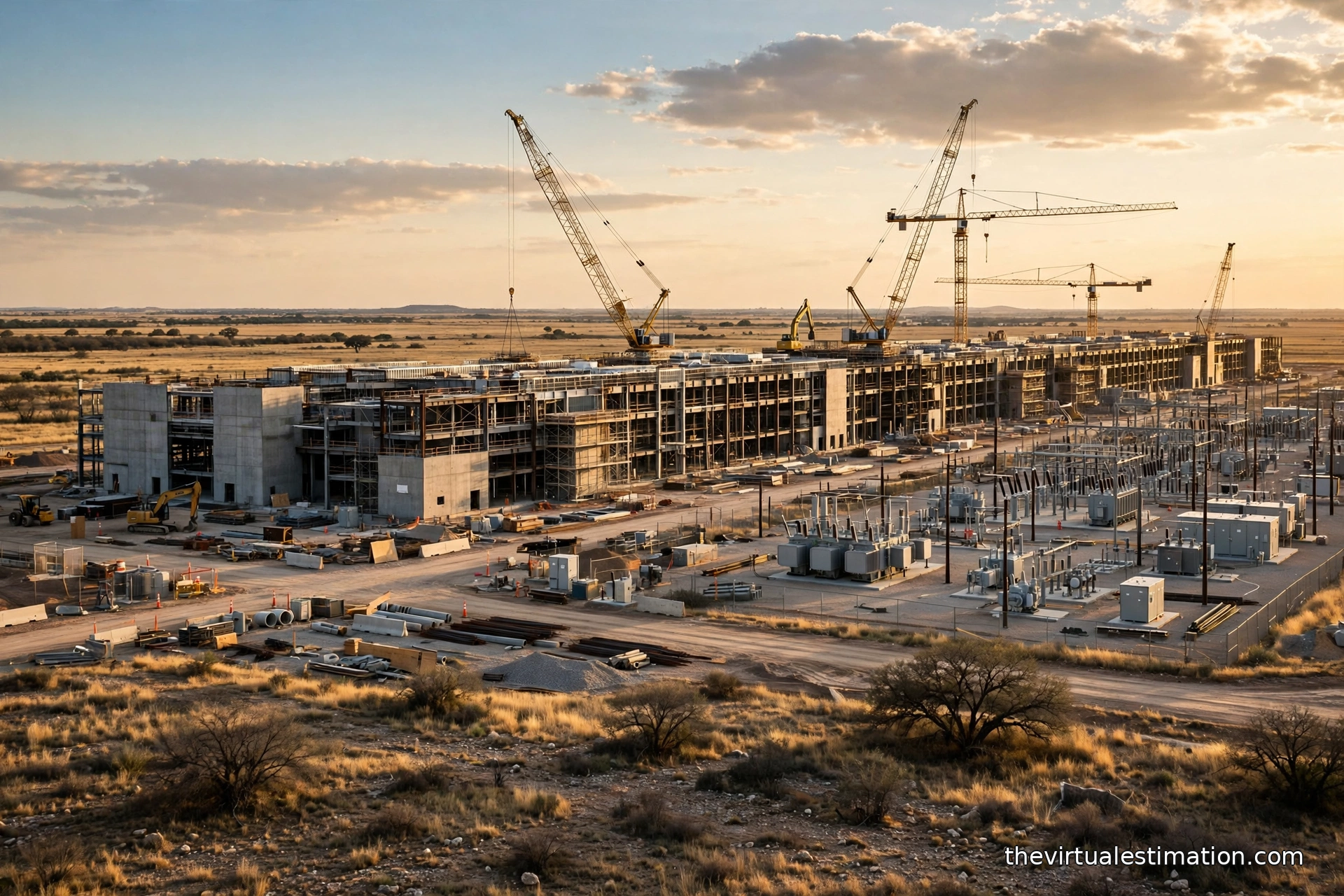
Here is how Dallas numbers stack on a bread-and-butter DFW project: an 8,000 square foot tilt-wall warehouse shell with a 2,000 square foot office build-out inside.
- Warehouse shell: 8,000 SF at $95/SF (mid-range for tilt-wall hard cost) = $760,000
- Office build-out: 2,000 SF at $120/SF (mid-range tenant improvement) = $240,000
- Site work: grading, detention, and paving on clay soil, 8% of hard cost = $80,000
- Geotechnical report: expansive-soil investigation = $6,500
- Permits and fees: valuation-based, roughly $1M declared value = $11,000
- GC general conditions: 6% = $64,800
- GC fee: 12% = $129,600
- Weather and contingency: 5% (hail season exposure, heat-schedule risk) = $54,000
- Total: $1,345,900, or about $168/SF all-in
The check against the benchmark table: $168/SF all-in lands inside the $130 to $250 industrial range, slightly above shell-only cost because of the office build-out and the Dallas-specific adders. If your number comes in under $140/SF on a project like this, you have probably skipped the soil work, the weather contingency, or the loaded labor. If it lands over $200/SF, you have probably double-counted or used Austin labor.
Dallas Estimating FAQs
How much do construction estimating services cost in Dallas?
A simple residential or small commercial estimate typically runs $200 to $400. Single-trade takeoffs (electrical, plumbing, drywall) run about $150 to $350. Full commercial preconstruction packages with detailed quantity takeoffs and bid leveling run $450 to $1,200 depending on project size and complexity.
What is the average construction cost per square foot in Dallas in 2026?
Residential runs $170 to $215/SF for new builds. Commercial ranges by type: office $190 to $330, industrial and warehouse $130 to $250, multifamily $200 to $350, medical $270 to $440. Use these as planning benchmarks, not bid pricing.
How long do Dallas building permits take?
Initial review runs 7 to 14 days for new commercial and about 2 days for residential, with a 3-day express option through the Q-Team. But median issuance for new commercial construction is still about six months, so plan the pre-construction schedule accordingly.
Why are Dallas foundations more expensive than other Texas markets?
Expansive Blackland Prairie clay. The soil swells up to 30 percent when wet, so drilled piers, post-tensioned slabs, and stiffened grade beams are the standard answer, and a geotechnical investigation is required. Budget for it on every bid.
Do I need Davis-Bacon wage rates on private Dallas work?
No. Private work prices on open-market labor. Davis-Bacon and state prevailing-wage rates apply only to federal and state-funded public projects. Using the wrong table either way will cost you the bid or the margin.
Get a Dallas estimate that holds up. The Virtual Estimation delivers fast, accurate construction takeoffs and estimates for Dallas-Fort Worth contractors, priced for this market's soil, codes, and labor rates. Start with our construction estimating services or email info@thevirtualestimation.com with your plans for a 24 to 72 hour turnaround.